
The promise of AI agents is easy to understand. They appear able to interpret a task, break it into steps, call tools, and complete work. In practice, the hardest problem is often not model intelligence. It is whether the business process is ready.
Deloitte's 2026 agentic AI strategy describes a reality check: many organizations are trying to automate existing processes that were designed around human workers. The result is that an agent is placed inside a messy workflow. It may move faster, but it can also scale the same errors, rework, and risk.
The research notes that many organizations remain in exploration or pilot mode, while a smaller share have solutions ready for deployment or active production use. For SMEs, the lesson is useful. Do not buy a tool just because it is called an agent. First decide which workflow deserves to be redesigned.
Agentic AI is more complex than a chatbot because it may access data, change state, trigger notifications, generate documents, and coordinate across systems. That means a business needs three foundations: a clear process, usable data, and controlled permissions. Without those, the agent becomes another tool that staff must supervise.
The first foundation is process design. Inputs, decision rules, output format, and human checkpoints should be defined before automation begins. A quotation workflow, for example, should not simply ask AI to reply to a customer. A better design collects requirements, classifies the service, checks whether information is complete, drafts an initial recommendation, and routes it to a staff member for confirmation.
The second foundation is data. Many companies keep information across email, WhatsApp, spreadsheets, legacy CRM systems, and personal staff files. If data is not searchable, reusable, or consistently named, an agent will struggle to make stable decisions. Deloitte also identifies searchability and reusability of data as common challenges for AI automation.
The third foundation is governance. What can the agent do? What is off limits? When does a human approve an action? How are mistakes logged? Which data cannot leave the company? These rules matter when workflows involve customer records, quotations, ad budgets, accounting categories, or contract content.
For Hong Kong SMEs, the right first use case is rarely the whole company. Start with one repeatable, high-frequency process with clear rules. Good candidates include enquiry classification, pre-quote information collection, advertising report summaries, after-sales reminders, content drafts, internal knowledge lookup, and simple operating reports.
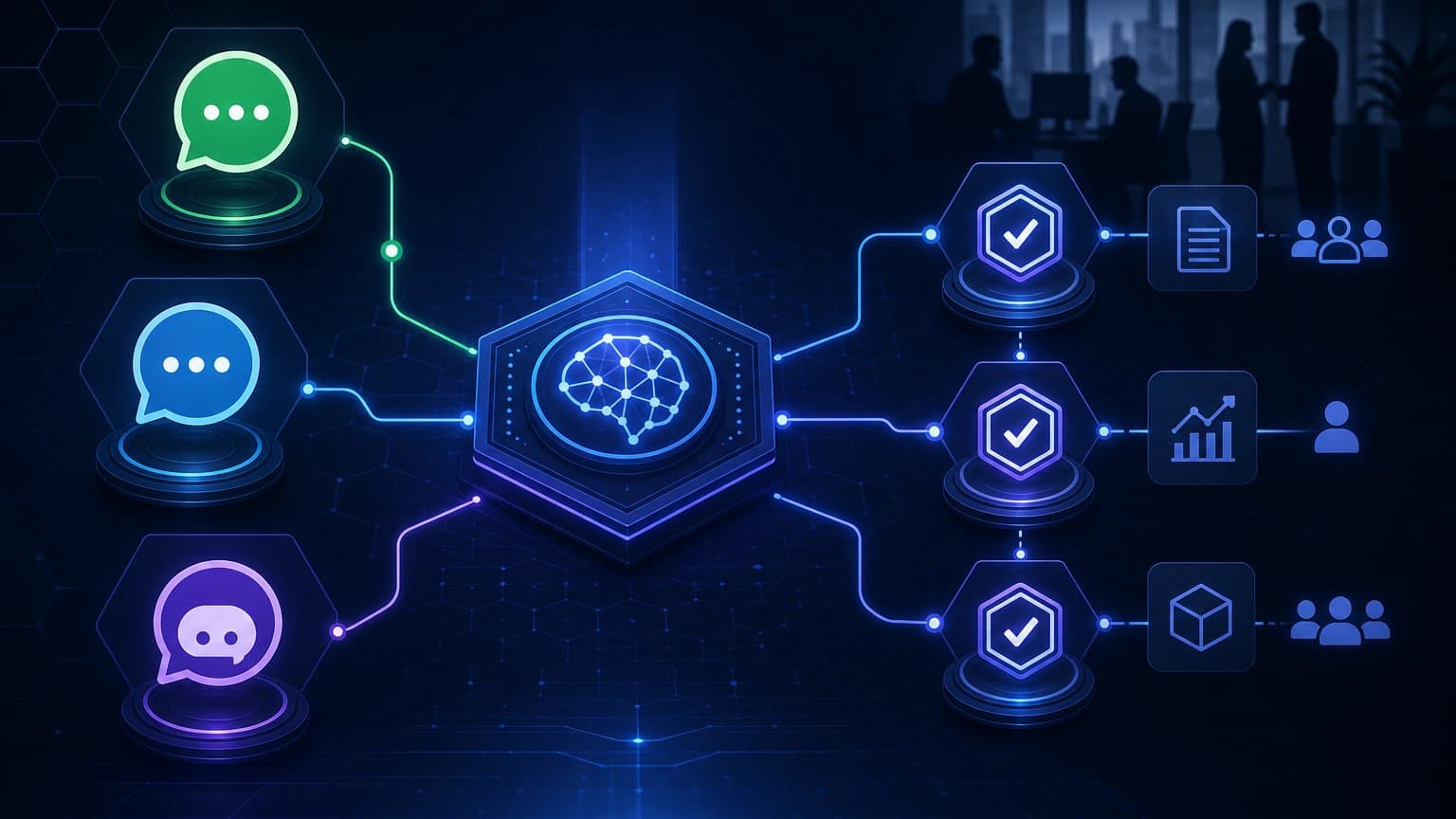
The VM Agent approach starts by clarifying the workflow, then deciding where AI belongs. The interface may appear inside WhatsApp, Telegram, or Discord because those are channels staff already use. But the real system is the workflow, data connection, and human confirmation model behind it.
The real value of agentic AI is not looking like a company that uses AI. It is making a piece of work that used to depend on memory, chasing, and manual formatting more reliable. That requires fewer demos and better process design.