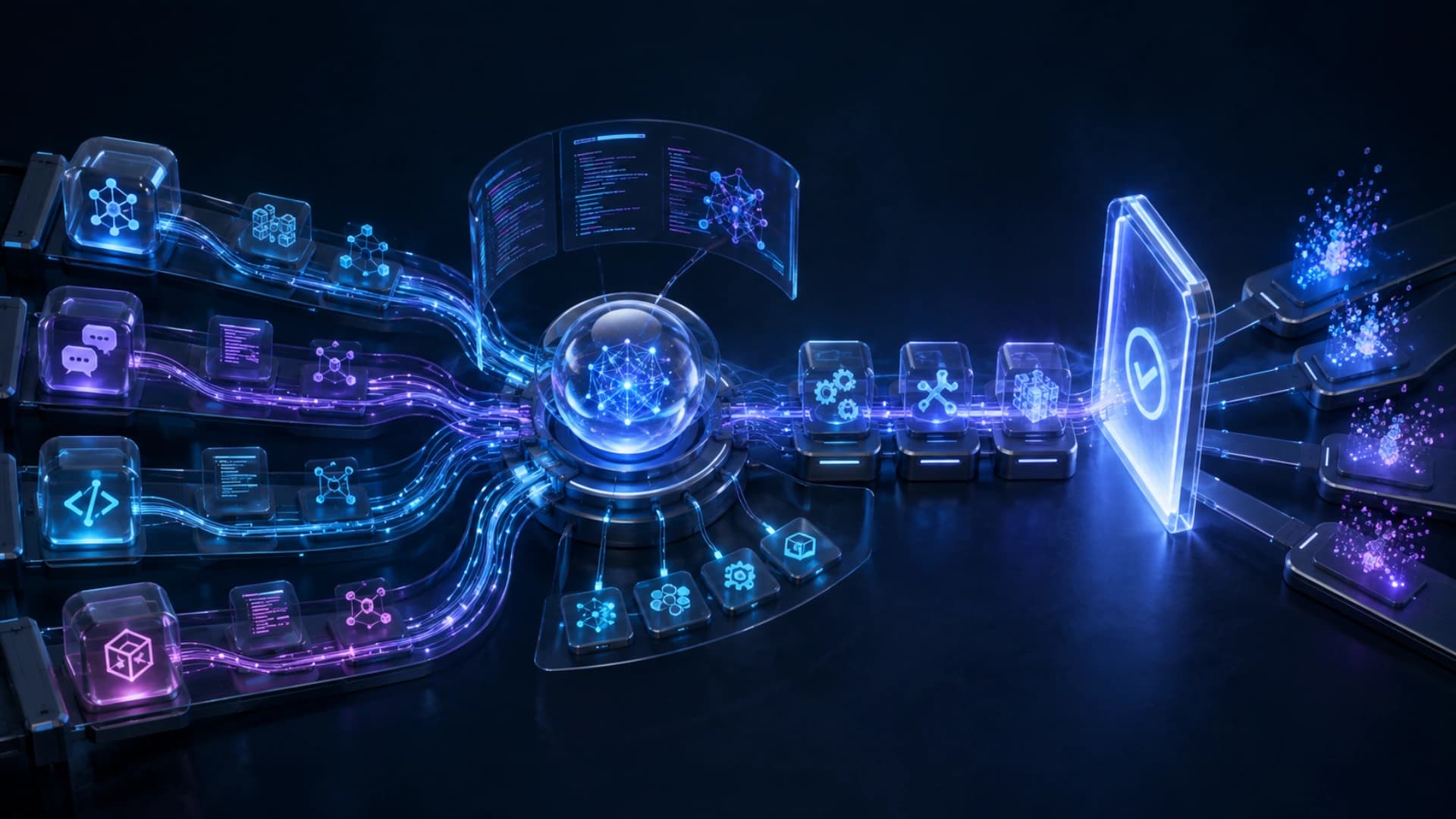
An arXiv paper submitted on August 18, 2026 presents Agent Lightning v1.0 and places the agent harness at the center of harnessed agentic reinforcement learning. Modern agents rely on a harness to manage tools, context, and control flow. The authors argue that if this layer is ignored during training, the model may not learn the way it will actually interact with an environment inside a production workflow.
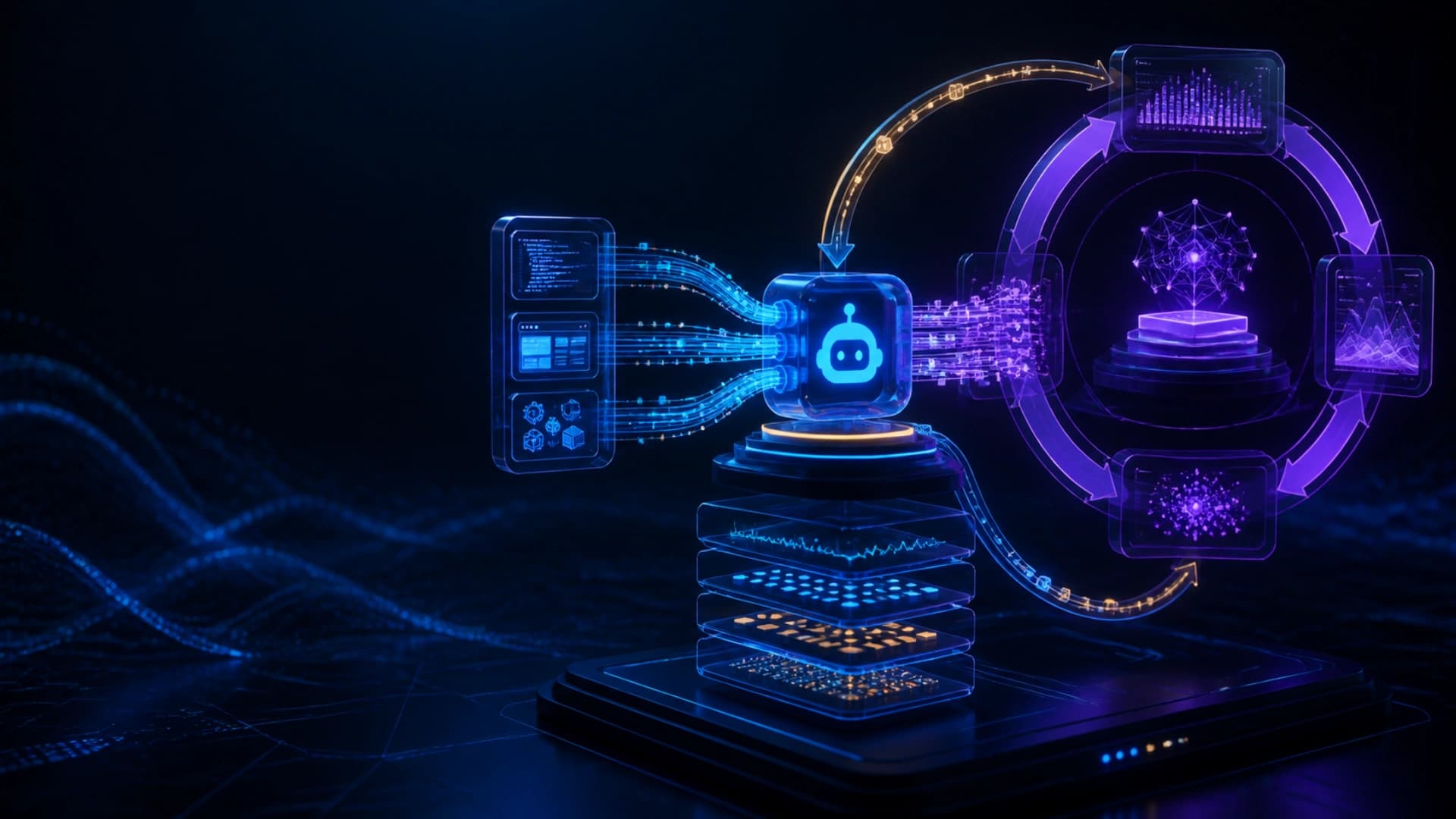
The original Agent Lightning direction connects arbitrary agents to RL training through an LLM endpoint proxy. Version 1.0 calls the paradigm harnessed agentic RL: the deploy-time harness owns the environment interaction loop, while the trainer observes sequences of LLM request-response pairs. That differs from traditional agentic RL, where the training engine owns the environment loop, and it brings real tool calls, context injection, and control flow into the training problem.
The architecture introduces implementation challenges such as retokenization, sample merging, advantage calculation, loss normalization, and backend scheduling. These concerns may not appear in ordinary chat-model training, but they directly affect stability and effectiveness for search agents, coding agents, and multi-tool workflows. The learning unit is not only a prompt and an answer; it also includes how the harness schedules interaction with the environment.
The paper describes Agent Lightning v1.0 as a lightweight framework of roughly 3,500 lines that supports arbitrary agent harnesses and evaluation for instruction-following, search, and coding agents. The authors release a complete coding-agent RL workflow and training scripts so other researchers can reproduce harness-centered training experiments.
The abstract reports that, with 6K training examples and modest compute, RL improves Qwen3.5-9B on SWE-bench Verified from 41.8% to 56.4%, an absolute gain of 14.6 points. This is the authors' result on a specified pipeline, data, and benchmark. It does not imply the same gain will transfer to other models, harnesses, or coding tasks, and it needs the full experimental details and independent replication.
The enterprise workflow lesson is that deployment and training should not be treated as completely separate. If a production harness rewrites context, schedules tools, switches subagents, or handles failures, those controls are part of the learning environment. Teams should retain reproducible trajectories, tool results, and version information; otherwise, even a higher model score will not reveal whether the improvement came from model capability, prompt rewriting, tool choice, or harness scheduling.
Agent Lightning v1.0 is still an arXiv preprint, not a finished production platform. Its important contribution is the framing: agent performance is jointly determined by the model and the harness. When enterprises train or evaluate long-horizon agents, the versioned and tested object is not only the model checkpoint. It is the execution environment around it.