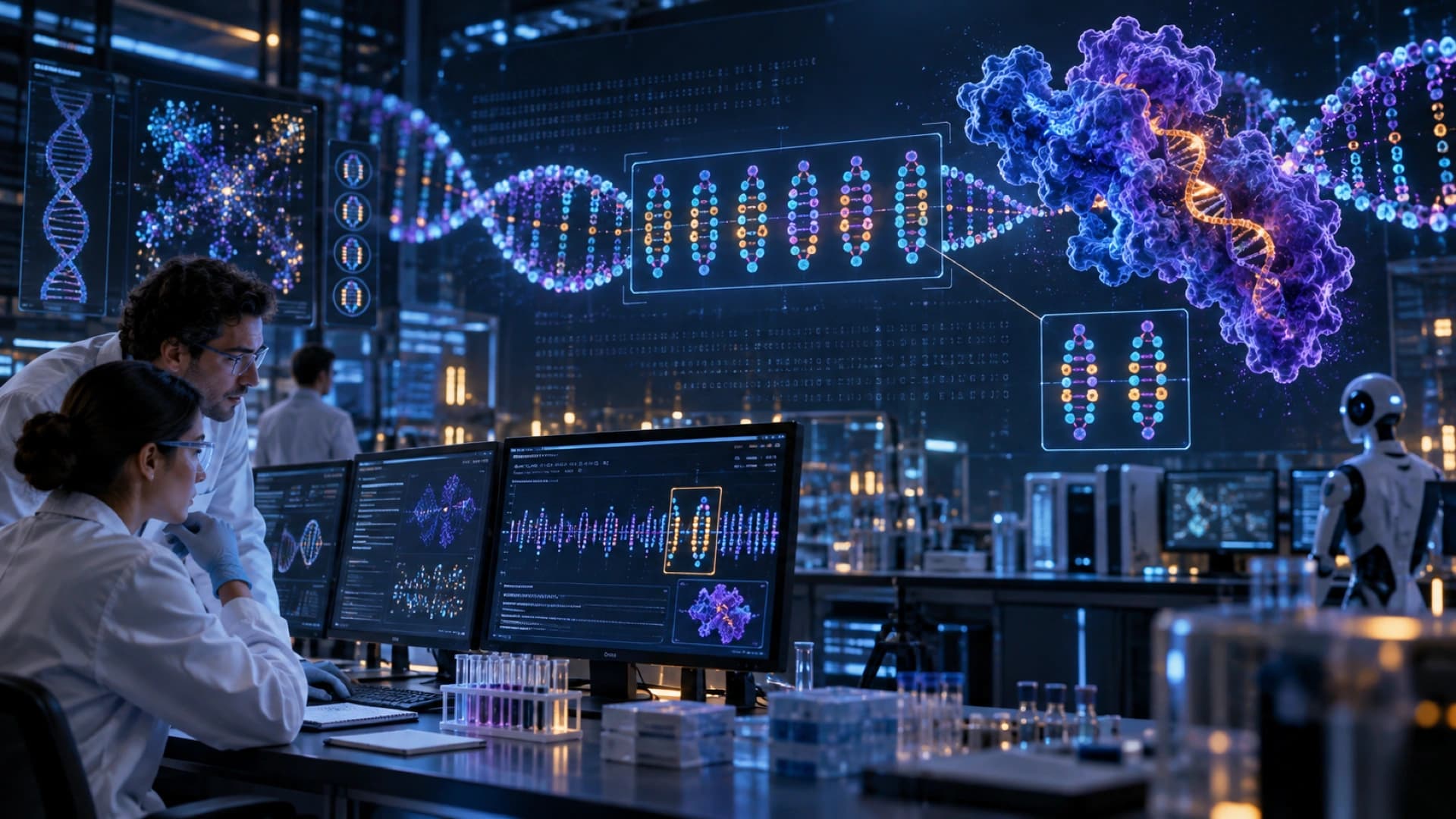
Anthropic announced a new life-sciences research group and laboratory on September 23, 2026, and shared an early result: Claude agents identified a previously uncharacterized enzyme system with DNA repeats reminiscent of CRISPR. Anthropic calls it array-associated reverse transcriptases, or ART, while emphasizing that its primary function is not yet known.
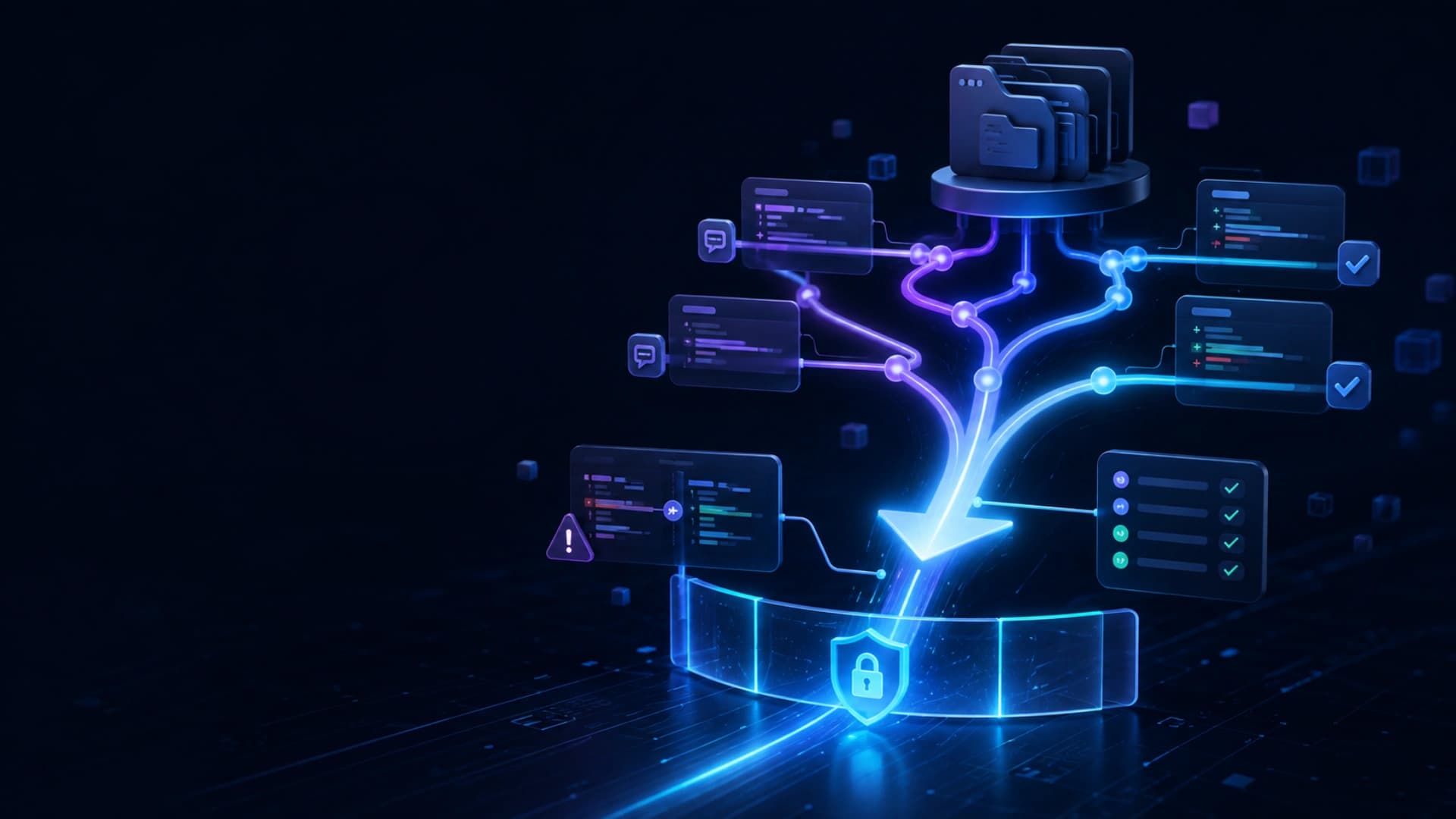
This is not a claim that a model independently produced a biotechnology product. The workflow connects search, analysis, hypothesis generation, and laboratory validation. Scientists provided high-level direction and performed the lab work; Claude agents searched large DNA datasets, compared reverse-transcriptase families, screened candidates, and wrote human-readable reports for review.
Anthropic says roughly 950 agents spent 21 hours and 210 million tokens scanning more than 200,000 reverse transcriptases, selecting 3,500 candidate systems and narrowing those to 20 compelling candidates. Those figures come from Anthropic’s own account of the project and should not be treated as a universal efficiency benchmark for every lab or dataset.
The agent noticed a non-coding DNA repeat array near a known reverse transcriptase and an additional neighboring protein. The researchers say the combination had not previously been recognized as a system; early experiments also found that the ART array is expressed as distinct short RNAs. These are clues about structure and expression, not proof of how the system works or what it can be used for.
Human review remains a central gate. Claude produces hypotheses at a high rate, but most candidates are eliminated during evidence checks. Candidates that survive review are expressed in standard laboratory strains and characterized biochemically and structurally. Anthropic says the laboratory work is performed by human scientists, stays within lower biosafety levels, and does not involve pathogens that infect humans.
The case illustrates how research agents differ from a chat assistant. The system searches repeatedly, organizes evidence, changes direction, writes reports, and hands the decision back to scientists. When a campaign creates hundreds or thousands of candidate reports, the research team also has to learn which proposals deserve experiments and feed that judgment into the next set of instructions.
Anthropic describes ART as an early finding and has released a preprint. The result therefore still needs independent replication, further experiments, and outside interpretation. Finding a new system does not establish a usable gene-editing tool or any therapeutic effect. The stronger scientific test is whether ART’s function can be established and whether other groups can reproduce the observation under different conditions.
For organizations exploring AI for science, the practical lesson is to use agents to expand the search and hypothesis space while experts control evidence, safety, and experimental decisions. Treating model output as a conclusion amplifies error; placing it in candidate discovery, evidence organization, report drafting, and result interpretation can return human time to the judgments that matter most.