
Anthropic launched Claude Sonnet 5 on June 30, 2026 as a high-performance model for production use. The important signal is not only a stronger model score. Anthropic is putting the emphasis on coding, tool use, long context, and agent workflows, which are the capabilities businesses actually need in operational AI systems.
Over the past year, AI coding tools have moved from answering programming questions to reading repositories, editing files, running tests, and correcting their own work. Claude Sonnet 5 points to a market where mid-to-high-end models become daily workflow engines, not models reserved only for occasional deep analysis. When a model can handle tools, longer context, and multi-step state more reliably, developers are more likely to keep AI inside the iteration loop.
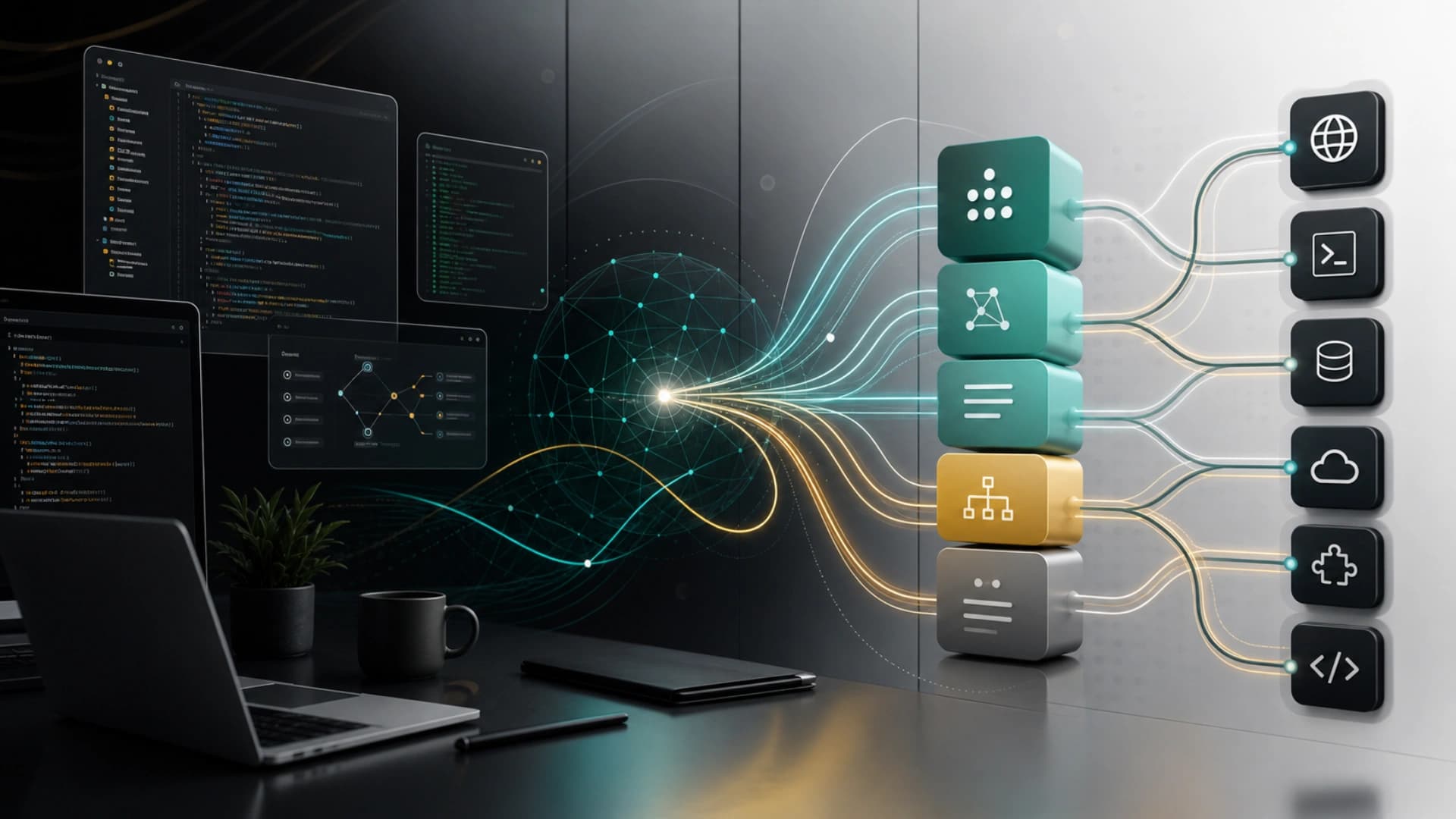
Parallel tool use is one of the more important agent signals. A real agent is not just a chat interface. It needs to inspect files, search context, call tools, consolidate results, and return the next step for human approval. The more reliably a model can coordinate tools, the closer it gets to being a delegable unit of work.
This also changes how companies evaluate models. Teams will not only ask which model is the smartest. They will ask whether it is stable in a specific workflow: can it understand a large codebase, avoid formatting mistakes, follow tool responses, and keep a clear objective during long-running tasks?
Claude Sonnet 5 extends the main 2026 AI agent theme: model capability is being tied more tightly to real work surfaces. The next competitive edge is not only benchmark performance. It is whether the model can work reliably across IDEs, browsers, documents, data, and internal systems.