
On August 13, 2026, DeepSeek announced the DeepSeek-V4-Pro GA Release and showed the DeepSeek Harness developer preview on the same day. Read together, they are more than a model launch. V4-Pro supplies stronger agent capabilities, while Harness addresses how a model understands its environment, uses tools, keeps working, and records what happened.
V4-Pro adds flexible reasoning effort. DeepSeek maps low, high, and max to simple tasks, daily Agent workflows, and complex work so developers can adjust the reasoning budget to the job. V4-Pro also supports the OpenAI Responses API natively; DeepSeek says it is optimized for Codex with one-click setup. Model names remain unchanged for API users. These are product claims from DeepSeek, not a guarantee that every agent task will improve by the same amount.
The API pricing design also adds scheduling as a variable. DeepSeek says the V4 lineup introduces peak and off-peak rates, with off-peak pricing 50% lower than peak. The new rates take effect at 16:00 UTC on August 16, 2026. For long-running agents and batch jobs, that connects model cost to the execution schedule. Teams may be able to place non-urgent work in cheaper windows, subject to availability and deadline checks.
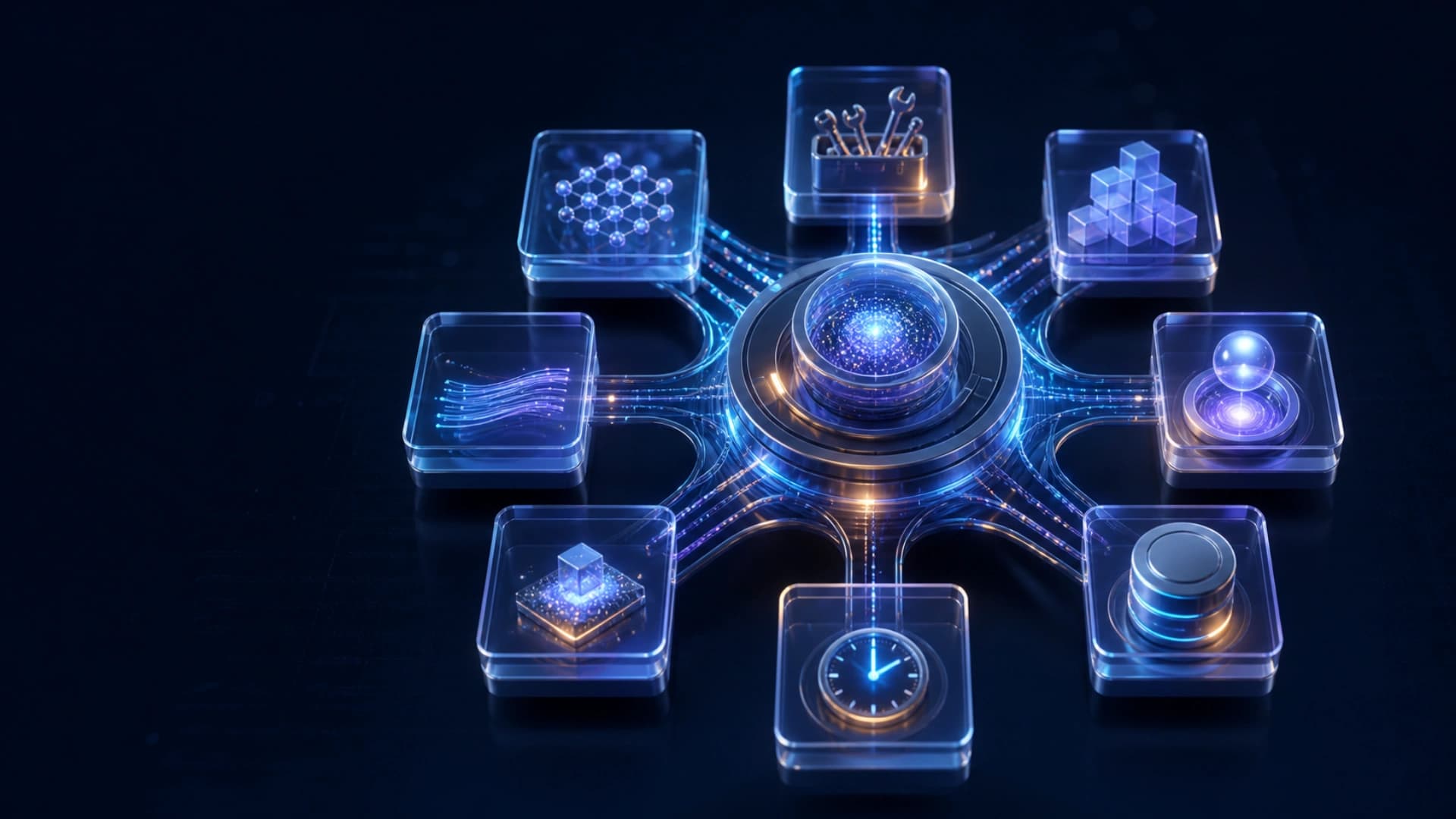
The central Harness idea is that everything is a plugin. DeepSeek lists models, tools, skills, sessions, sandboxes, storage, loops, scheduling, and the UI as replaceable or recomposable plugins. The Cordis kernel manages plugin mounting, unmounting, and dependencies, while services and events connect the capabilities. The result is an agent runtime that can be observed, swapped, and tested rather than treated as one opaque model call.
Traceability is another major theme. Harness records the system prompts, reasoning, tool calls and results, subagent scheduling, and context injections seen by the model in an append-only session log. Its Trajectory view lets developers inspect records by source and supports resume, fork, search, and replay. That is valuable for debugging, evaluation, and audit because an agent can fail in a tool, context, or scheduling decision rather than only in the final text.
Harness offers several runtime modes: Standard includes the full toolset; Code mode lets the model orchestrate multiple tool calls through the Code Mode SDK; Minimal mode keeps only a shell and file editor; and Creator mode is for inspecting the runtime, testing Cordis plugins, and composing custom presets. Developers can start the Web UI with npx @deepseek-ai/dsh web or install from the GitHub source. DeepSeek still labels the project a developer preview and warns of compatibility-breaking changes.
The practical signal is that agent products are competing on whether models can work inside a controllable runtime, not only whether they can answer. V4-Pro's reasoning effort and Responses API address model access and task sizing; Harness puts tools, memory, sandboxes, loops, scheduling, and traces into a composable layer. Production teams still need to audit plugin permissions, sensitive data, replay-log protection, and upgrade compatibility. A developer preview is not a production SLA.