GitHub announced on June 11, 2026 that pull requests created by github-actions[bot] can now run CI/CD workflows after user approval. The approval requirement is a security measure to prevent generated code from automatically triggering workflows that may access sensitive information.
Although this looks like a GitHub Actions update, it matters for AI coding agents and automated repair flows. More repositories are getting pull requests from bots or agents: test fixes, dependency updates, configuration changes, security-scan responses, and candidate implementations. If those pull requests cannot run CI, teams can end up merging bot-generated changes without the normal verification layer.
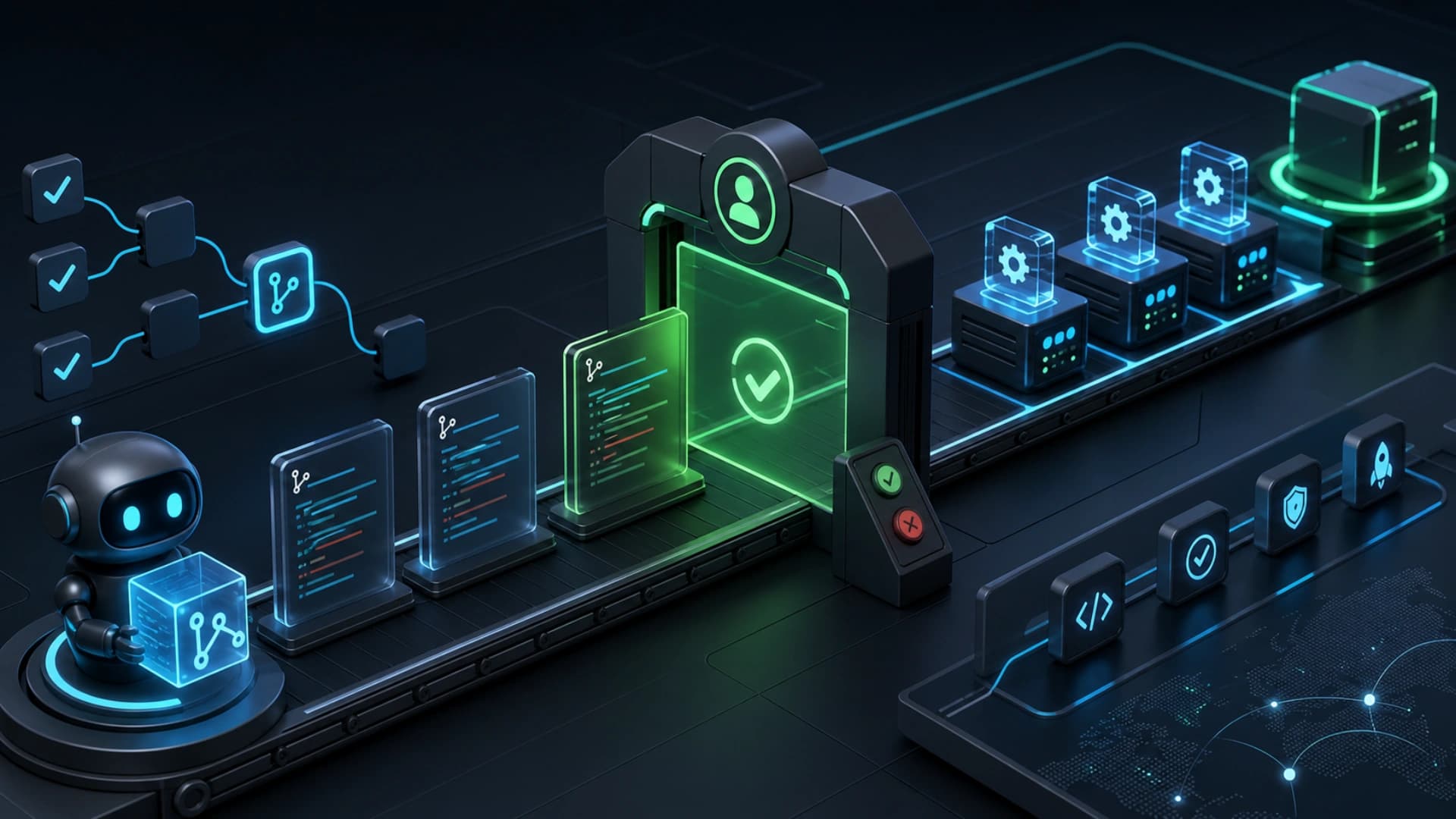
GitHub says pull requests previously generated by github-actions[bot] could not run CI/CD workflows, which allowed bot-generated changes to be accidentally merged without CI. The new behavior lets all pull requests, including bot-generated ones, run configured workflows if approved by a user with write access to the repository.
The important detail is the approval gate. The risk of AI-generated code is not only that the code may be wrong. It may also touch workflow secrets, deployment credentials, cloud permissions, or internal environments. Putting bot PRs behind a human approval step is a more mature agentic engineering pattern.
For engineering teams, this means AI automation can enter more of the PR lifecycle: the agent creates a branch and pull request, a human checks the source and intent, CI is approved, tests and security checks run, and merge decisions remain under human or governed rule control. That is much safer than letting an agent open a PR without verification or write directly to the main branch.
The change also aligns with the behavior of GitHub Copilot-generated pull requests, suggesting GitHub is moving different sources of agentic changes into a consistent safety model. Over time, governance for AI coding agents will focus less on whether the agent can write code and more on who approves what it runs, which secrets it can reach, which checks it passes, and what audit trail remains.
Overall, this is a small but important signal that AI workflows are entering the formal software delivery chain. When bot-created pull requests can run CI after approval, teams can preserve verification inside a security boundary instead of choosing between automation speed and test confidence.