
GitHub published its Copilot weekly releases for August 31 on September 4, 2026. The update is not just a model list. It addresses three boundaries in agentic coding: which model is used, which code should stay out of context, and how far an agent can go before a change is merged.
On model choice, GitHub says Claude Fable 5.1 is available to Copilot Pro+, Max, Business, and Enterprise users, while Gemini 3.8 Flash is rolling out to Pro, Pro+, Max, Business, and Enterprise users. For teams, model choice is becoming an everyday engineering setting rather than a lab comparison. Permissions, cost, latency, and model behavior now belong in the same operational discussion.
The more consequential governance update is that the Copilot app and Copilot CLI now honor content exclusions, keeping sensitive code out of context across agentic workflows. That moves a rule often treated as documentation into the execution path where an agent actually reads data. Organizations should still test coverage across monorepos, symbol search, the CLI, and cross-tool actions rather than relying only on an enabled setting.
In JetBrains, the GitHub Copilot harness is generally available. GitHub describes it as supporting faster feature delivery and better code quality. The significance of a harness is not only code generation; it is the combination of tool calls, context, and editor actions into a more repeatable execution environment.
VS Code 1.136 brings Agent Merge into public preview. GitHub says it can get a pull request merge-ready by resolving review feedback, failed checks, and merge conflicts. That moves an agent from helping write code toward completing the repair loop before a merge. Public preview should not be read as permission to bypass human reviewers, branch protection, or CI policy.
The same release also makes multi-root workspaces experimental, bringing Copilot and Claude agent sessions to every folder in a workspace. Chat sessions can be organized into a hierarchy and marked when they need attention. These may look like interface details, but they reflect coding agents managing multiple long-running tasks rather than answering one file-level question at a time.
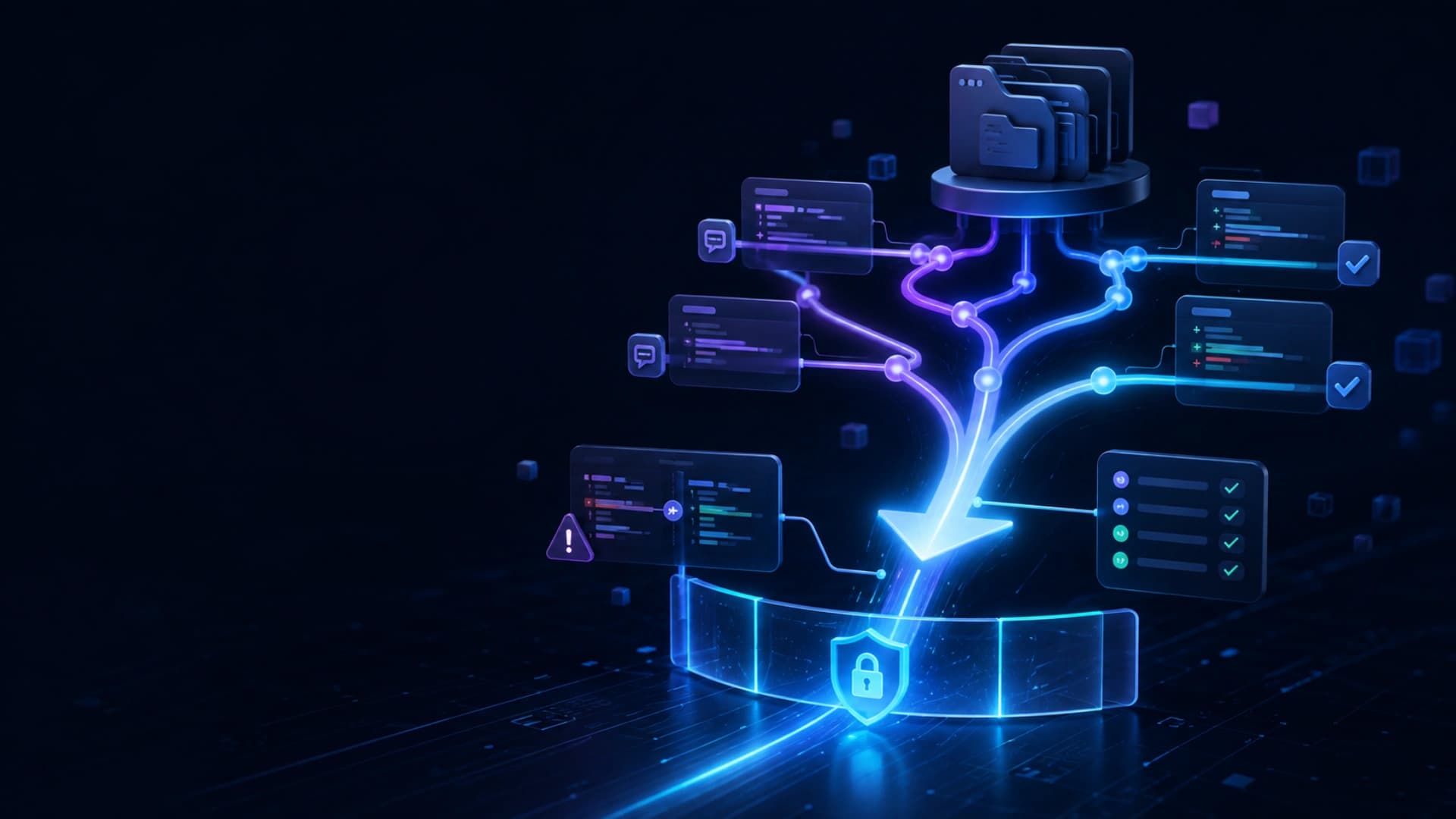
The common thread is a control boundary. Model choice affects reasoning and data paths; content exclusions define what the agent can see; Agent Merge defines the delivery point an agent can change. Without aligned permissions, approvals, logs, and rollback rules, a richer feature set can expand the risk surface faster than the productivity gain.
Teams adopting these features should start with a test repository. Verify that excluded files do not appear in prompts, reviews, or CLI context; verify that Agent Merge leaves an understandable diff after a failed check; and verify that branch protection and human approval still control the final merge. GitHub’s update shows agent coding moving toward production workflows. The operational work is to manage context, permissions, and delivery boundaries.