
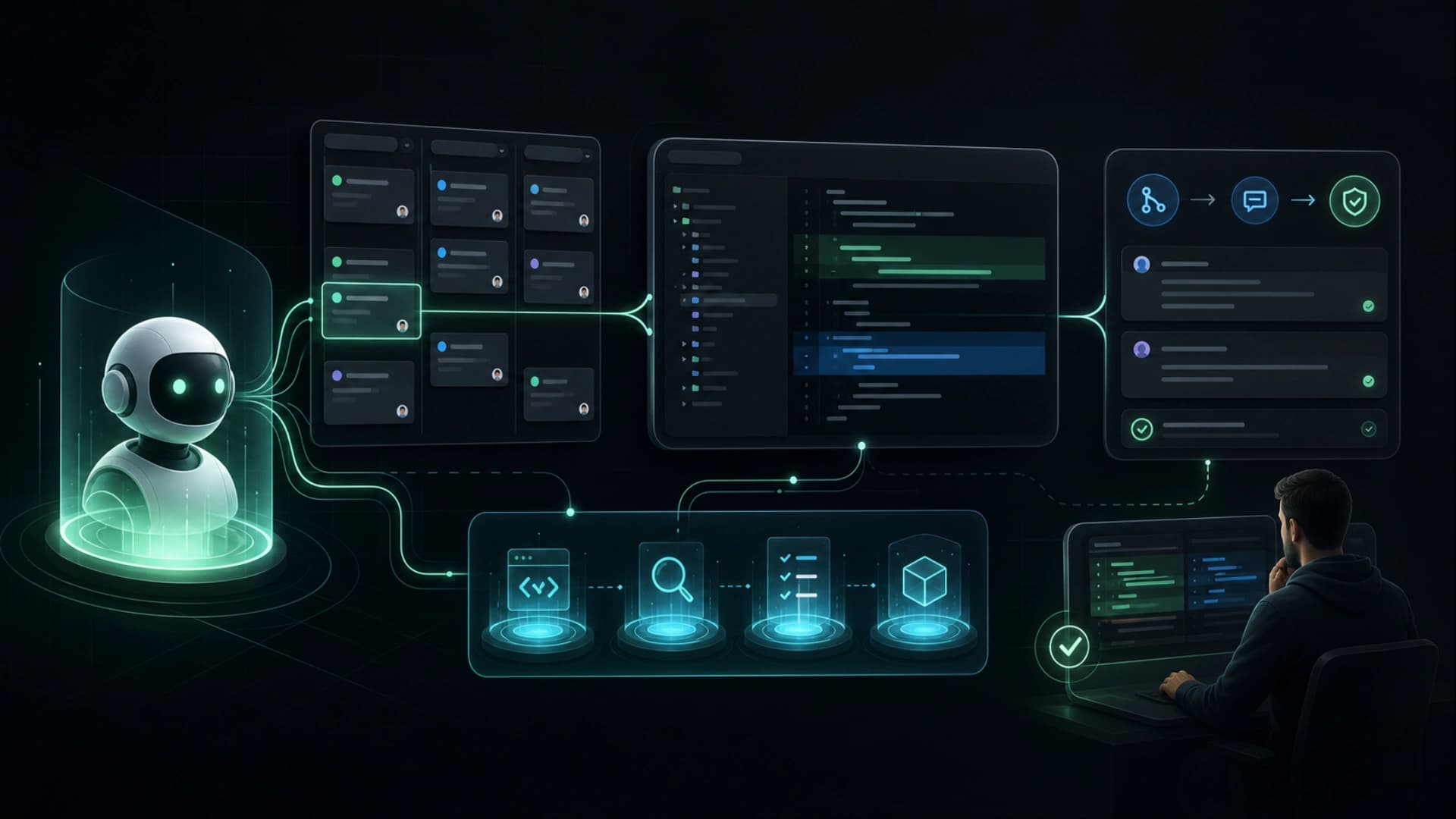
GitHub announced general availability for Copilot cloud agent for Linear on July 23, 2026. Teams can assign a Linear issue to Copilot cloud agent, which analyzes the task in the background, opens a draft pull request, and works inside its own ephemeral development environment.
The workflow connects project management to code delivery. GitHub says the agent reads the issue, works in an ephemeral environment powered by GitHub Actions, streams progress back to the Linear activity timeline, and requests a pull request review when it finishes. The issue becomes the agent’s entry point, while the pull request becomes an inspectable delivery artifact.
The general-availability release also brings important controls into the Linear workspace. Teams can choose the model for a task, point Copilot to a custom agent in the repository, set the base and working branches, and add instructions by mentioning Copilot in a comment while the session runs. Linear agent guidance can apply those settings across a workspace or team, so every issue does not need to restate the entire operating policy.
The value is not simply that the agent can write code. The more important change is the set of observable handoffs: the issue supplies the goal and context, the agent works in isolation, the Linear timeline exposes progress, the draft pull request preserves the result, and review remains an explicit gate before merging. For teams handling many small fixes, documentation tasks, or repeatable engineering work, that boundary is easier to govern than an agent that only returns an answer in a chat window.
GitHub’s announcement does not provide independent benchmarks for delivery speed, code quality, or error rates. Availability, supported Copilot plans, and integration behavior are provider-reported product details, and real results will depend on repository permissions, CI configuration, branch policy, issue quality, and review capacity. Opening a draft pull request does not make a change ready to merge.
A careful rollout would keep early tasks reversible, testable, and easy to review: test additions, documentation changes, small refactors, or narrowly specified bug fixes. Teams should retain the issue-to-commit link, CI results, agent messages, and human review record before expanding permissions. Those records make it possible to see whether a failure came from task definition, tool access, generated code, or the delivery pipeline.
The update points to a clear direction for coding agents: from helping inside an editor to accepting work inside a project-management system. When an agent can start from an issue, work in an isolated environment, and deliver through a pull request, people can spend more time defining the problem, checking evidence, and handling exceptions instead of repeatedly moving context between tools.