
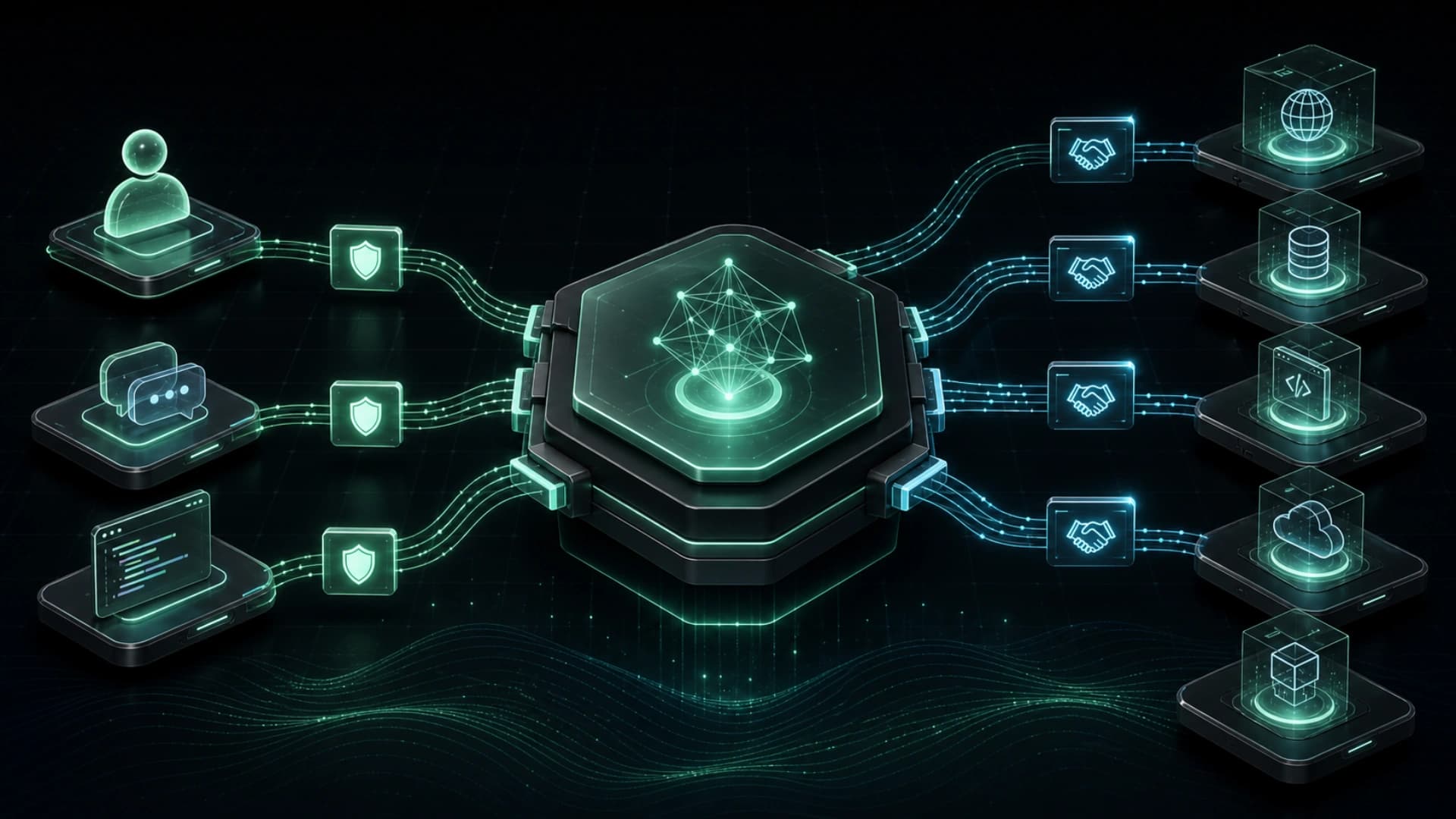
GitHub outlined its support for the next Model Context Protocol specification in a July 23, 2026 update to GitHub MCP Server. The announcement says the MCP protocol is expected to move to a stateless core on July 28, with GitHub MCP Server supporting the new specification ahead of the official release.
For agent systems, the important change is how connection state is handled. GitHub says the new core removes sessions and initialize, allowing clients to connect faster and complete the handshake in parallel. The update also points to extensions for capabilities such as MCP apps and Enterprise Managed Auth, while multi-round HTTP requests enable remote servers to support interactions such as elicitation.
GitHub made three implementation changes for its MCP Server. First, it removed Redis sessions: initialize no longer writes to a database, and calls no longer read from the database. Second, it avoided deep inspection of every request payload before the SDK processes it; values needed for logging and secret scanning are read from HTTP headers guaranteed by the specification. Third, it upgraded elicitation so URL-based login for the stdio MCP server can work with both older and newer clients through a Go SDK wrapper.
The design moves MCP server reliability away from a long-lived server-side connection and toward a horizontally scalable protocol built around requests, identity, and tool semantics. Removing one layer of session state can simplify scaling across multiple agents, remote tools, or regions. It does not mean state disappears: clients, identity systems, external stores, and the semantics of each operation still have to coordinate it.
GitHub also highlights official conformance tests. The company says the suite can help agents check clients, servers, the draft specification, and tier-one SDK implementations against expected behavior. That matters because one successful tool call is not evidence that a server remains reliable through errors, retries, authentication, elicitation, and version transitions.
This is a GitHub product announcement, so it does not independently prove that every MCP server will switch in the same way on July 28. Claims about backward compatibility, performance, and the need for no action should be checked against the SDK versions, client behavior, proxies, authentication flow, and enterprise network policies in use. Stateless transport is not an automatic security boundary; least-privilege permissions, secret redaction, auditability, and tool-input validation still belong in the application design.
For development teams, the update is a useful review point. Check whether the current server depends on server-side sessions, whether authentication or transaction context has been placed incorrectly in initialize, whether a proxy rewrites headers, and whether cross-version conformance tests exist. The next stage of MCP is not only about giving agents more tools. It is about making tool connections testable, scalable, and governable.