
Google published its ADK 2.0 explainer on July 1, 2026 with a direct message: production AI agents cannot rely only on a long prompt and a model deciding every step. Real enterprise processes need predictable paths, clear failure states, human approval points, and cost control.
The post describes the problems that appear when agents move from prototype to production. They can loop, skip business logic because of hallucinations, or fail without clean exceptions. That is not only a prompting problem. It is an orchestration problem.
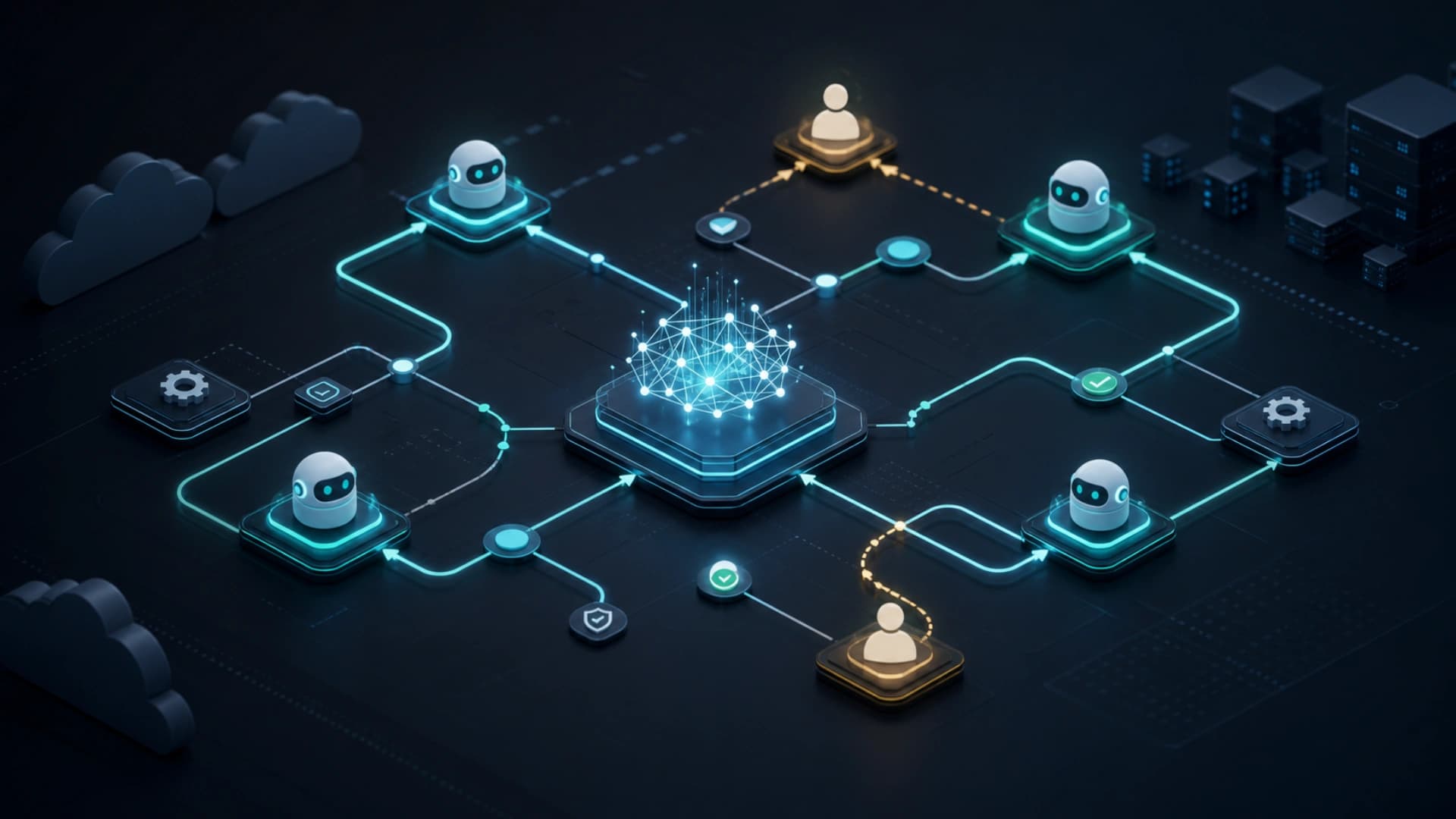
ADK 2.0 adds workflow runtime capability to the agent toolkit. Developers can define graph-based or dynamic workflows for steps that should run as code, such as data lookup, routing, refunds, and CRM updates, while reserving LLMs or specialized agents for the parts that truly require language understanding, classification, or drafting.
That hybrid design matters for companies. If a process is already explicit, such as step A always preceding step B, asking an LLM to rediscover the next step on every run adds tokens, latency, and variance. Deterministic steps make the agent behave more like auditable software.
Google also frames this as a security issue. A purely autonomous agent can be pushed off path by prompt injection because the model is deciding execution flow. ADK 2.0 uses a workflow graph to constrain the executable path, so even a manipulated LLM node may not have a route to an unauthorized action.
The practical takeaway is not only an SDK feature. It is a design rule: use software control for flows that can be defined, and use models for the parts that need interpretation and generation. That distinction is becoming one of the main lines between agent demos and production systems in 2026.