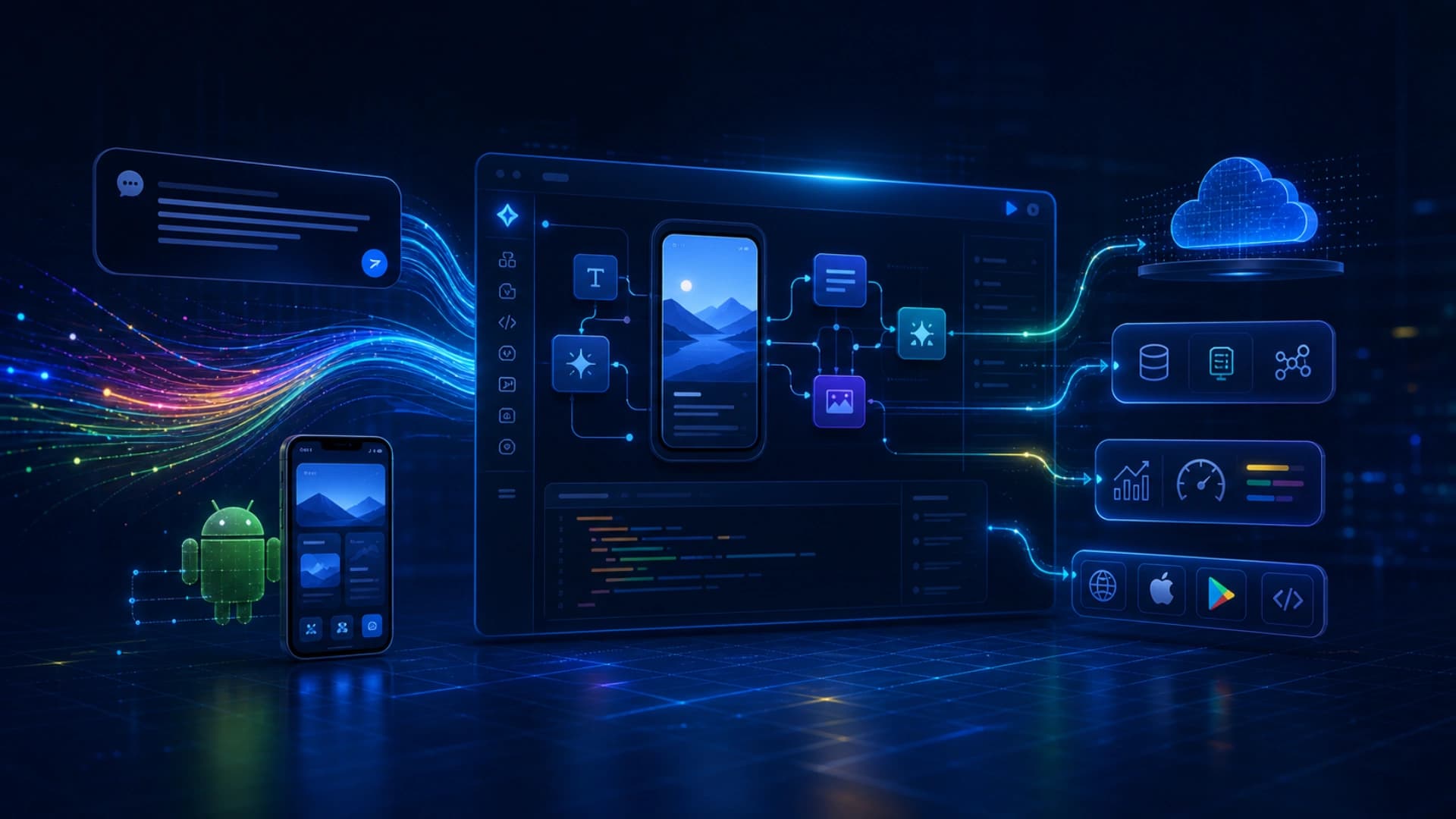
Google's I/O 2026 update to AI Studio is really about shortening the path from prompt to app. The new capabilities include native Android app building, direct Google Workspace integrations, a mobile app with pre-registration, and exports to Google Antigravity so project history, files, and secrets follow you into the next environment.
The important shift is that AI Studio is no longer being framed as a demo playground. Google is moving it closer to a production workflow entry point. If you can pull from Sheets, organize Drive files, and generate tools around those systems in one place, then AI is no longer just writing code snippets. It is starting to shape the earliest product structure.
Another practical addition is native Android app building right in the build tab, with browser-based emulator and ADB support. That compresses a process that normally depends on a powerful laptop, local SDK setup, and a fair amount of environment work into a lighter and more continuous interface. For prototypes, internal tools, and small products, that is a meaningful reduction in friction.
Google also added custom asset generation and preview editing, which means UI design and functionality are no longer completely separated. Combined with free deployment for the first two Google Cloud apps and no credit card requirement, Google is clearly trying to lower the barrier to getting builders started.
The broader message is consistent: AI should help people move from idea to running product. Once Workspace, mobile, Android, and deployment are all part of one flow, AI Studio starts to look less like a prompt lab and more like a full development workspace.