
Google's behind-the-scenes post about I/O 2026 is more useful for content and marketing teams than a normal product announcement. It does not only list Gemini features. It shows how Google placed the same AI tools used on stage into large-scale event production: short films, visual identity, pre-show experiences, interactive games, a latte app, speaker title cards, and on-site sticker generation.
The best example is the "TPU Training Day" film. Google's team first used puppetry and simple 3D animation to control performance, framing, and camera movement. Then Nano Banana generated stylized first frames. To keep frames consistent, the team built a custom tool inside Google AI Studio to test frames at scale before using Gemini Omni and other experimental models to merge the base animation and stylized outputs.
The important point is that AI did not replace creative direction. It was inserted into a controlled pipeline. Humans handled the concept, performance, camera language, and art judgment. AI helped with exploration, stylization, scale, and repetitive variations. Google's emphasis on preserving small human imperfections is a useful reminder: mature creative AI workflows should not flatten every artifact into the same synthetic finish.
The visual identity work shows the same pattern. Google fed Gemini models past brand guidelines and five years of I/O recaps, then ran micro-experiments and iterated with Nano Banana to explore icon styles. The final system used a four-color gradient, overlapping transparencies, and interlocking icons across keynotes, physical signage, and digital apps. That is a brand system working with generative models, not one prompt replacing a design team.
The immersive experiences show the engineering side of AI production. Jellectronica used Google Colab to train a YOLO8 model, ran it on a Coral NPU to track jellyfish movement, and translated that movement into music using Google Flow Music and the Lyria API. Infinite Scaler used Google AI Studio, Gemini API, Gemini Canvas, Google Antigravity, Lyria 3, and Nano Banana to let players create 3D world assets from prompts.
The Antigravity Coffee Co. pop-up is closer to a real commercial app. Google used Flutter, Gemini Enterprise Agent Platform, Google Antigravity, and Nano Banana to build a generative UI that changed in real time. Firebase connected the frontend to models, while Google Cloud and Firebase handled backend, monitoring, and production complexity. That is not only a demo screenshot. It is a live generative application.
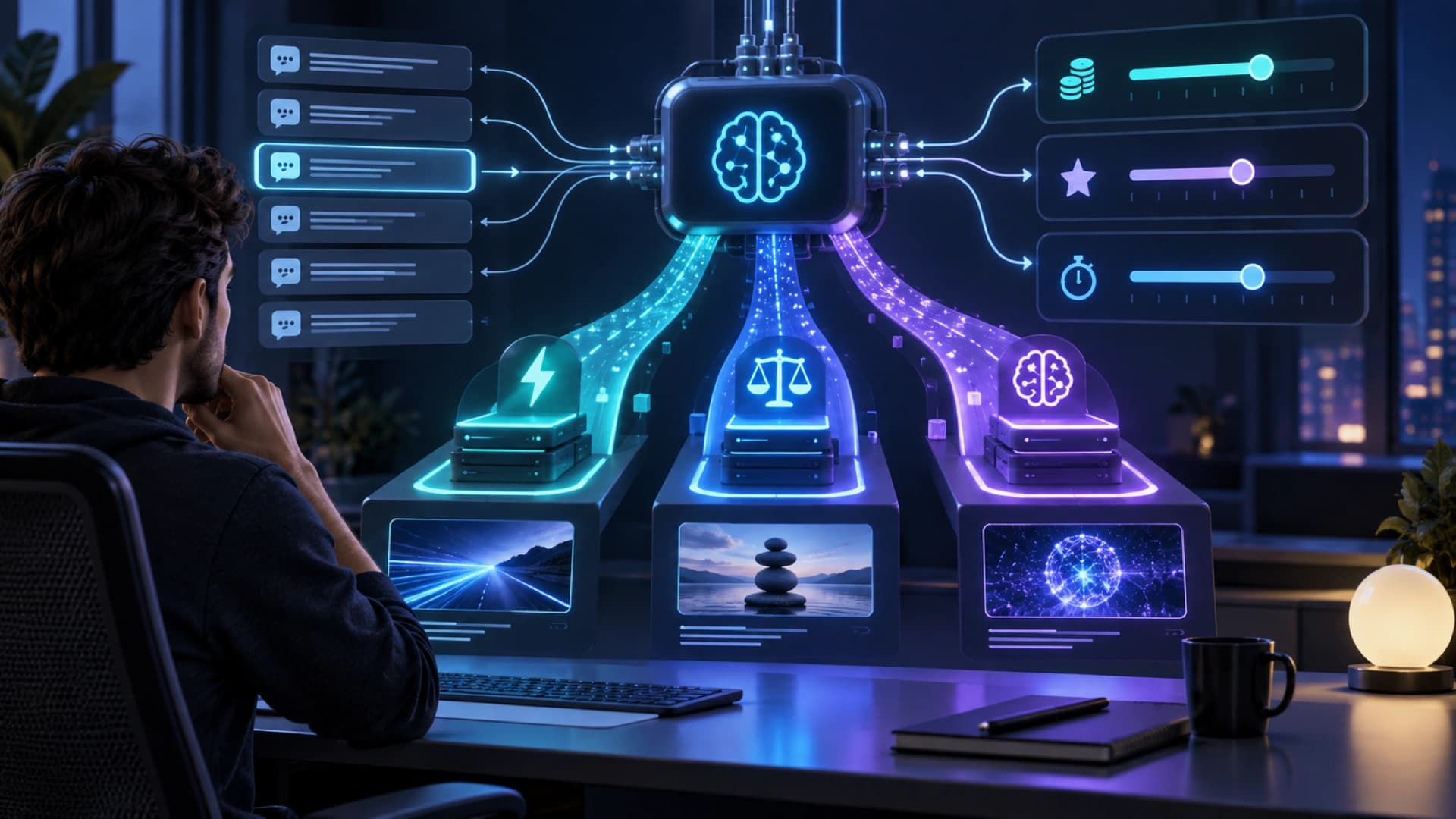
The lesson for AI marketing is direct. The advantage will not come from simply being able to write prompts. It will come from putting AI into storyboard creation, asset generation, QA, interactive apps, deployment, and live operations. Every step needs references, constraints, review, and fallback paths, or faster generation will only create faster chaos.
The I/O 2026 case study shows creative AI workflows moving from single images and single copy drafts toward cross-media, cross-tool, cross-team production systems. The repeatable advantage is not one beautiful generation. It is the ability to combine human judgment and model output into a stable workflow.