On May 11, 2026, Microsoft published its April Copilot Studio updates under a direct theme: agent governance, intelligent workflows, and connected app experiences. This is not one isolated feature release. It signals enterprise AI agents moving from being easy to build toward being manageable, measurable, and scalable.
Microsoft starts with the practical question many organizations face: how do you expand automation without losing control? A single agent can be powerful, but once agents connect through workflows and integrate across systems, visibility, governance, and predictability become much more complex. That is exactly where many enterprise pilots get stuck before production.
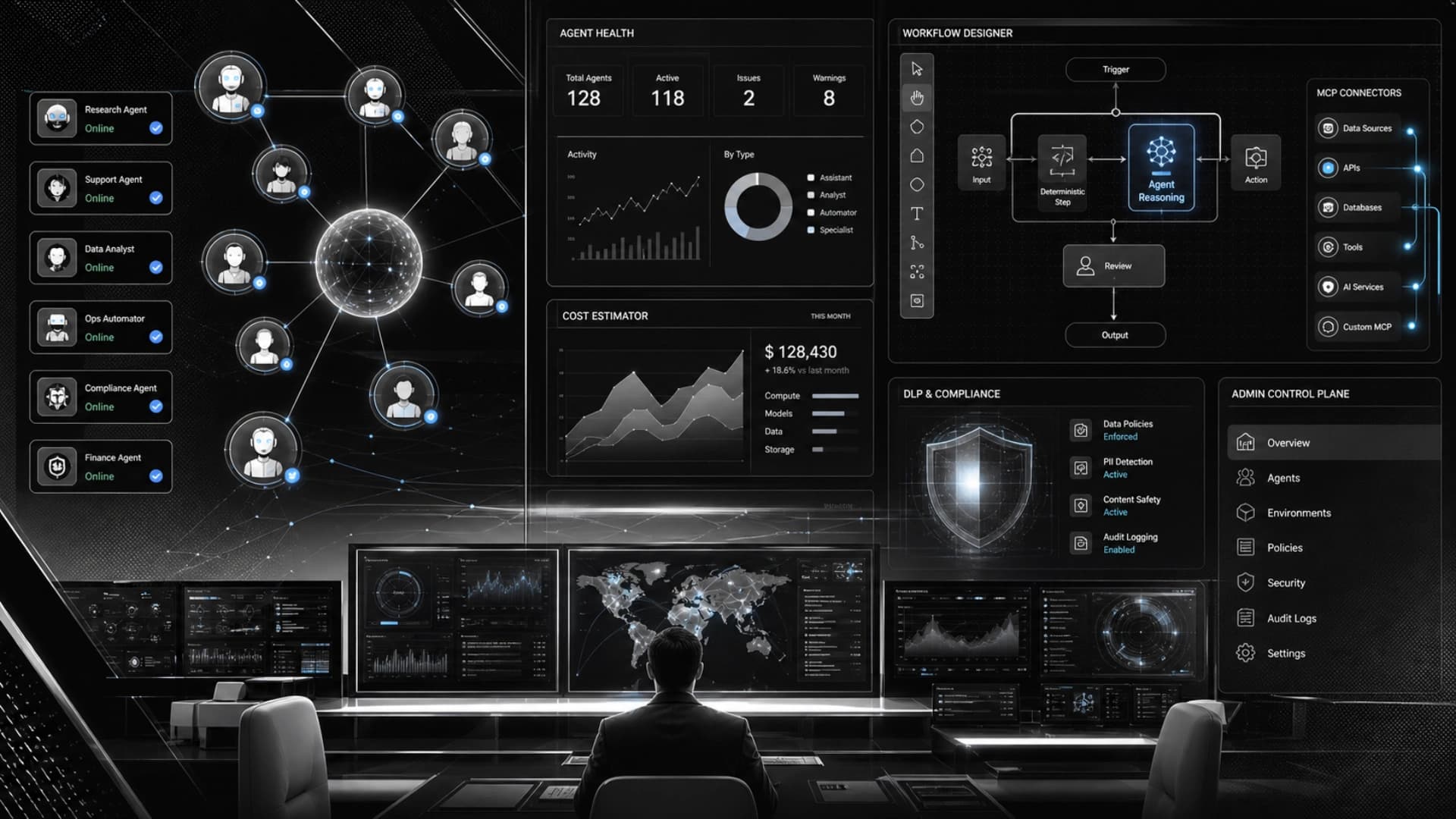
The first group of updates focuses on visibility and control. Copilot Studio now shows agent status directly in the authoring experience, helping admins see security and protection posture, authentication gaps, and policy impacts. The Analytics Viewer role is also generally available, giving operational stakeholders read-only access to agent analytics without the ability to modify configuration or publish changes.
That permission split matters. Enterprises cannot expect a small IT group to watch every agent alone, but they also cannot allow every reporting viewer to change production agents. Microsoft is separating visibility from change control, which makes agent governance look more like mature IT management.
Agent 365 is another key piece. Microsoft says Agent 365 is now generally available as a centralized control plane for managing agents across an environment, bringing together inventory, permissions, behavior, and activity. For Copilot Studio customers, agents they build can be managed alongside Microsoft 365 and partner ecosystem agents with shared policies, security controls, and lifecycle oversight.
Cost is also becoming part of governance. The expanded agent usage estimator now supports Dynamics 365 agents such as Sales Qualification Agent and Customer Service Agent, helping companies forecast Copilot credit consumption across scenarios. When agents move from small trials to department-scale deployment, cost predictability becomes as important as capability.
The second major direction is turning workflows into governed intelligent automation systems. Copilot Studio workflows are deterministic step-by-step automations. Now teams can place agent nodes inside those workflows so a prescribed step can delegate reasoning, decisions, or output generation to an agent. That pattern is more enterprise-ready than relying on one fully autonomous agent, because variable reasoning sits inside defined process boundaries.
Microsoft is also adding preview support for MCP server-enabled tools, a centralized admin-controlled Workflows Agent environment, and DLP policy support so workflows can act across systems while staying inside security, permission, and compliance boundaries. With apps in agents generally available, agents can also let users review data, update records, approve requests, or create assets inside Copilot Chat instead of forcing context switches.
Taken together, the update shows the next enterprise-agent battleground. It is no longer only who can build an agent fastest. It is who can manage agent health, permissions, cost, evaluation, workflow nodes, MCP tools, and app actions in one governed system. Once agents enter production, governance is not an add-on. It is the product.