
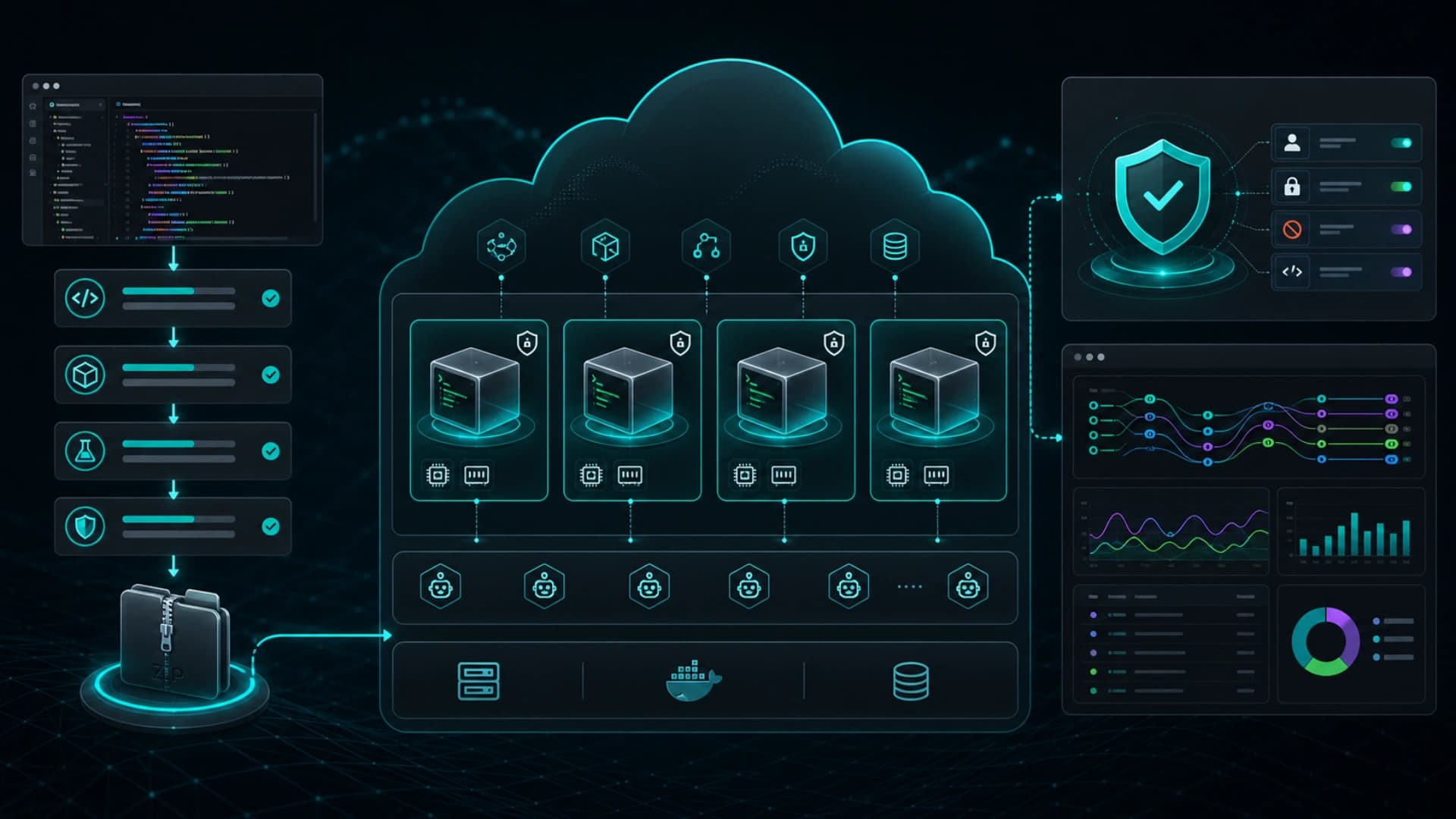
Microsoft Azure Developer Community described source-code deployment for Foundry Hosted Agents on June 11, 2026. The preview capability lets developers deploy an agent from a '.zip' source package instead of always building and pushing a container image first.
At first this looks like another deployment option, but it matters for the agent development loop. During prototyping, teams often want to change agent logic, test tool calls, inspect execution records, and then tighten permissions and runtime controls. If every change requires container build, registry, image tag, and deployment plumbing, the inner loop slows down.
Microsoft's lifecycle is straightforward: package, create or update, poll until active, then invoke. The source-code path uses 'code_configuration', while the container path uses 'container_configuration'. They are mutually exclusive on one version. That gives teams a maturity path: use source-code ZIP deployment for fast iteration, then move to containers when the runtime needs tighter control.
Dependency resolution is an important design choice. 'remote_build' lets Agent Service install dependencies from requirements.txt or a .NET project file during provisioning, which suits smaller uploads and early development. 'bundled' runs the ZIP as-is with prebuilt dependencies, which fits private dependencies, reproducible builds, or projects that do not restore cleanly server-side.
The bigger signal is that production AI agents need a deployment layer, not only a model and a framework. Real operations need identity, permissions, logs, state, versions, rollback, and resource control. Hosted Agents source deployment lowers deployment friction so teams can spend more time validating agent behavior.
It does not remove engineering governance. Developers still need dependency pinning, secret handling, role assignment, cost awareness, log hygiene, and a plan for preview API changes. Easier deployment makes promotion and approval rules more important, not less.
Overall, Microsoft's update shows agent runtime competition moving from whether an agent can run to whether it can be deployed continuously with software engineering discipline. When source packages, CLI, VS Code, and REST APIs can all feed a managed runtime, AI workflows become easier to connect to existing CI/CD and operations governance.