On July 27, 2026, Microsoft introduced Project Perception, an agentic security system designed for an AI-shaped threat environment. Microsoft does not present it as another alert dashboard. It describes a Cyber Stack that connects signals, context, models, specialized agents, and defensive actions into a continuously operating system.
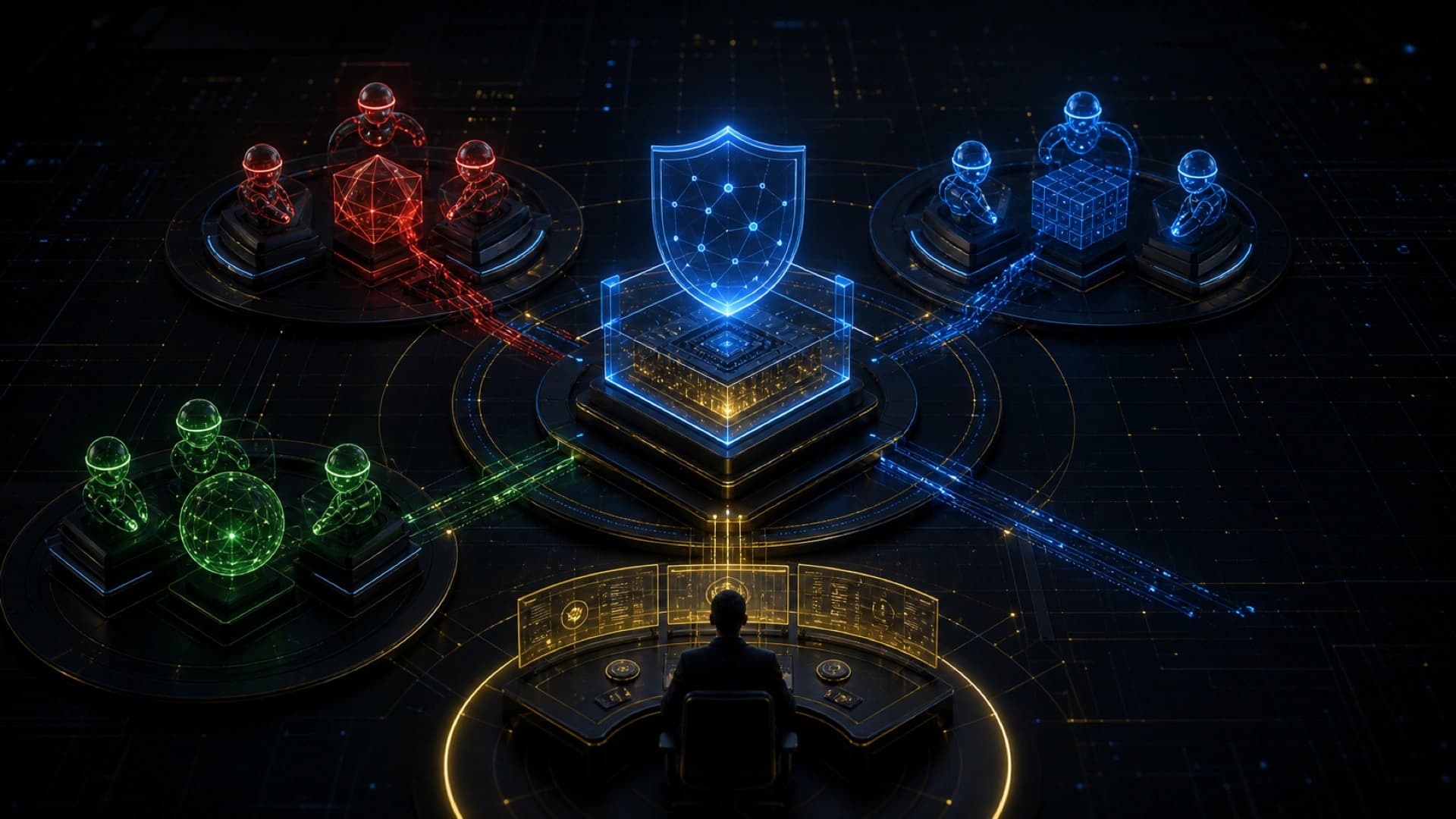
Project Perception divides the work across three classes of agents. Red team agents look for possible paths to compromise. Blue team agents investigate signals, reason over context, and decide what represents meaningful risk. Green team agents take corrective action and strengthen the environment. Together, the agents form a loop from discovery to evaluation, remediation, and improvement.
Microsoft says the system can observe identities, endpoints, applications, data, clouds, and AI systems across the digital estate. It turns the information that agents would otherwise have to gather and reconstruct repeatedly into a continuously updated security context. That is a vendor description of the architecture; its practical value will depend on data coverage, permissions, and integration quality.
The other important design choice is a multi-model architecture. Microsoft argues that no single model is best for every security task, so the system can select models based on quality, reliability, latency, and cost. The first scenario brings MAI-Cyber-1-Flash into MDASH, Microsoft's multi-model agent team for software vulnerability management.
Microsoft says this configuration reached 96% on CyberGym, 12 points above Mythos, and delivered almost 50% cost savings compared with the current MDASH configuration. These are Microsoft-reported claims, not independent benchmark conclusions. Teams evaluating the system should check model versions, datasets, scoring methods, and real false-positive and false-negative rates.
Project Perception also makes the control surface explicit. Agents are not limited to producing recommendations; they can connect to actuators inside Microsoft Security products and turn decisions into protective actions. Microsoft still says humans remain in control. For high-risk security operations, approval rights, emergency shutdown, and the boundary between automatic and human-confirmed remediation matter more than the number of agents.
The broader signal is that agentic security is moving from asking whether a model can find a vulnerability to asking whether a system can continuously understand an environment and act safely. Project Perception was scheduled to enter public preview on August 3, so availability, integrations, cost, and long-term outcomes should not be treated as production-verified results yet.