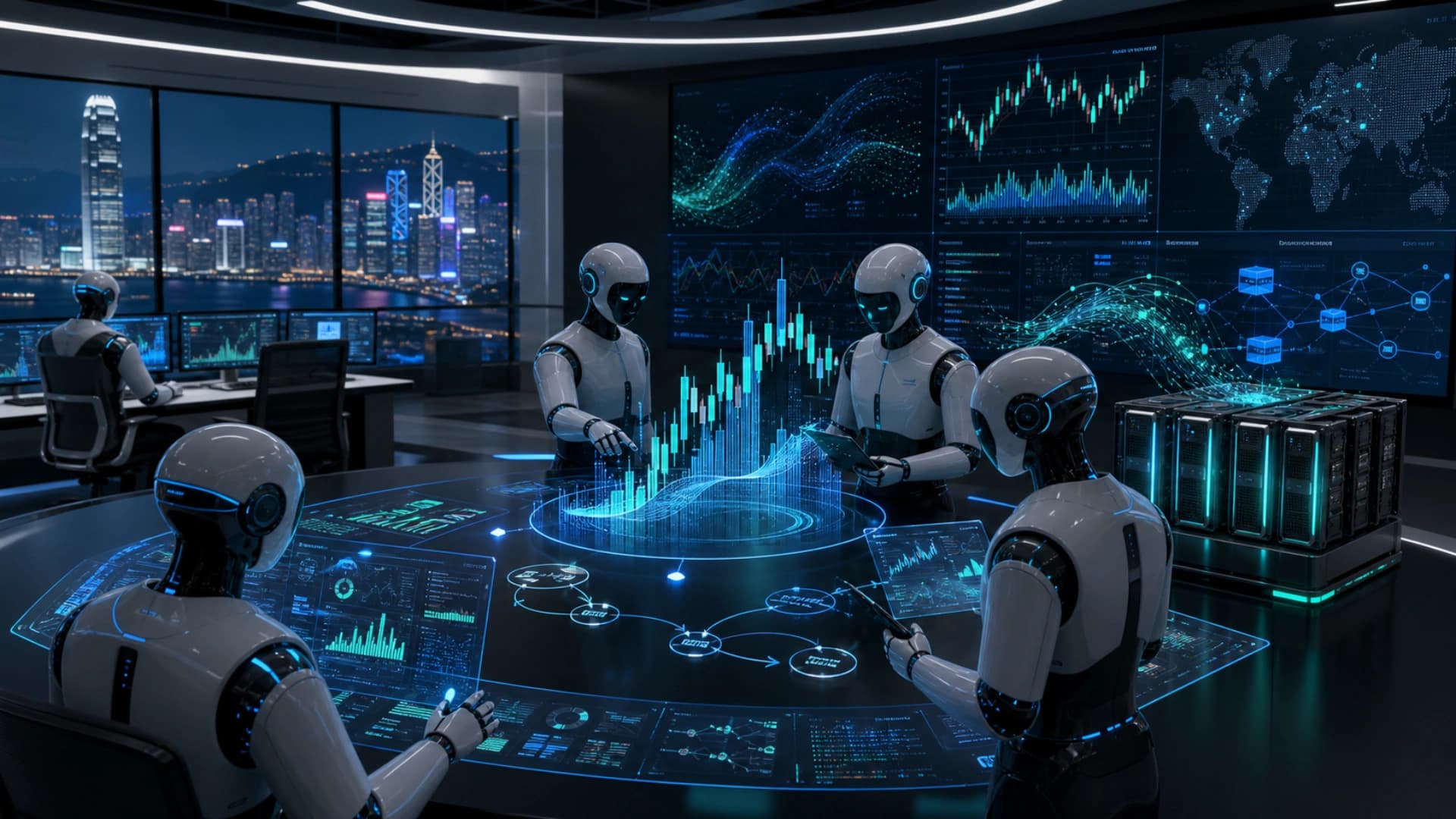
NVIDIA Developer Blog published a multi-agent system example on May 21, 2026 focused on financial signal discovery. The relevance goes beyond quantitative finance. It demonstrates a more mature agent workflow where hypothesis generation, code writing, backtesting, and iterative refinement are split across specialized agents.
Traditional quantitative research requires researchers to propose hypotheses, write code, run backtests, and refine the results by hand. NVIDIA notes that this workflow often moves between data scientists, developers, and analysts. The multi-agent approach aims to automate parts of the loop and shorten the time between idea and tested result.
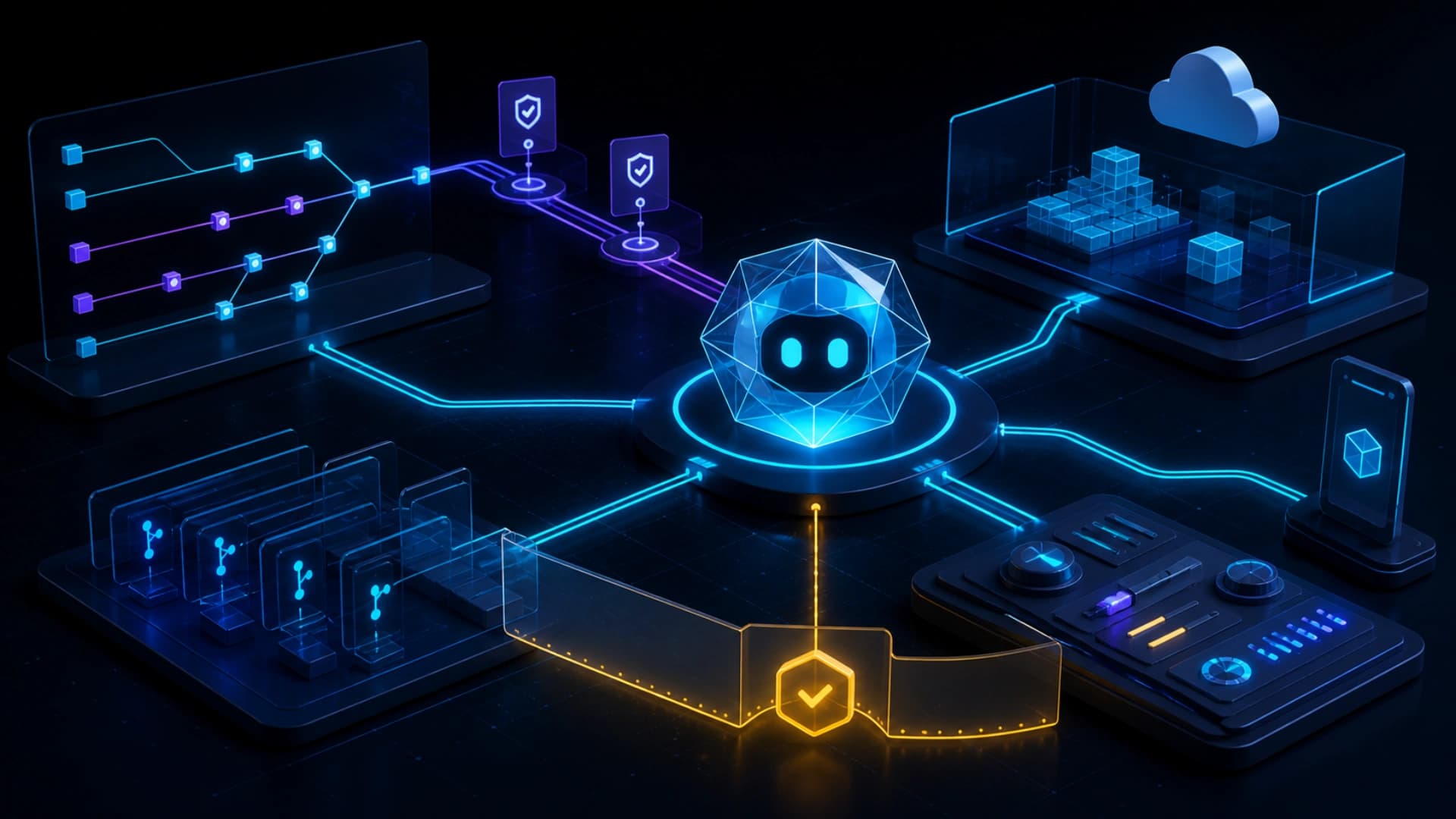
The example uses NVIDIA Nemotron open models and NeMo Agent Toolkit. The system coordinates three specialized agents: a Signal agent that identifies potential alpha signals from market data, a Code agent that translates signal descriptions into executable Python code, and an Evaluation agent that runs backtests, applies logical evaluation, and feeds results back into the next iteration.
The most interesting part is the continuous loop. NeMo Agent Toolkit manages handoffs between agents and preserves context such as signal definitions and backtest results, allowing the system to move repeatedly through creation, execution, and refinement. That is much closer to real work than a single agent producing a one-time answer.
NVIDIA also emphasizes the importance of a structured toolbox. The signal generator is not allowed to invent arbitrary formulas freely. It works with a predefined set of mathematical operators covering arithmetic, ranking, time series, momentum, deltas, and related building blocks. This constrains the model to combine explainable and executable pieces, reducing the risk of invalid or illogical outputs.
The pattern applies beyond finance. Many business workflows can be decomposed into proposing a solution, turning it into executable steps, testing the result, and improving it: marketing experiments, sales lead scoring, support triage, quoting rules, replenishment logic, and operating reports. Useful agent systems are often not one large model doing everything, but several role-specific agents connected by clear data, tools, and evaluation loops.
NVIDIA's article shows agentic AI moving from answering and coding toward testable, optimizable, auditable workflow loops. When each round can be evaluated and fed back, an agent has a chance to become process infrastructure rather than a one-off assistant.