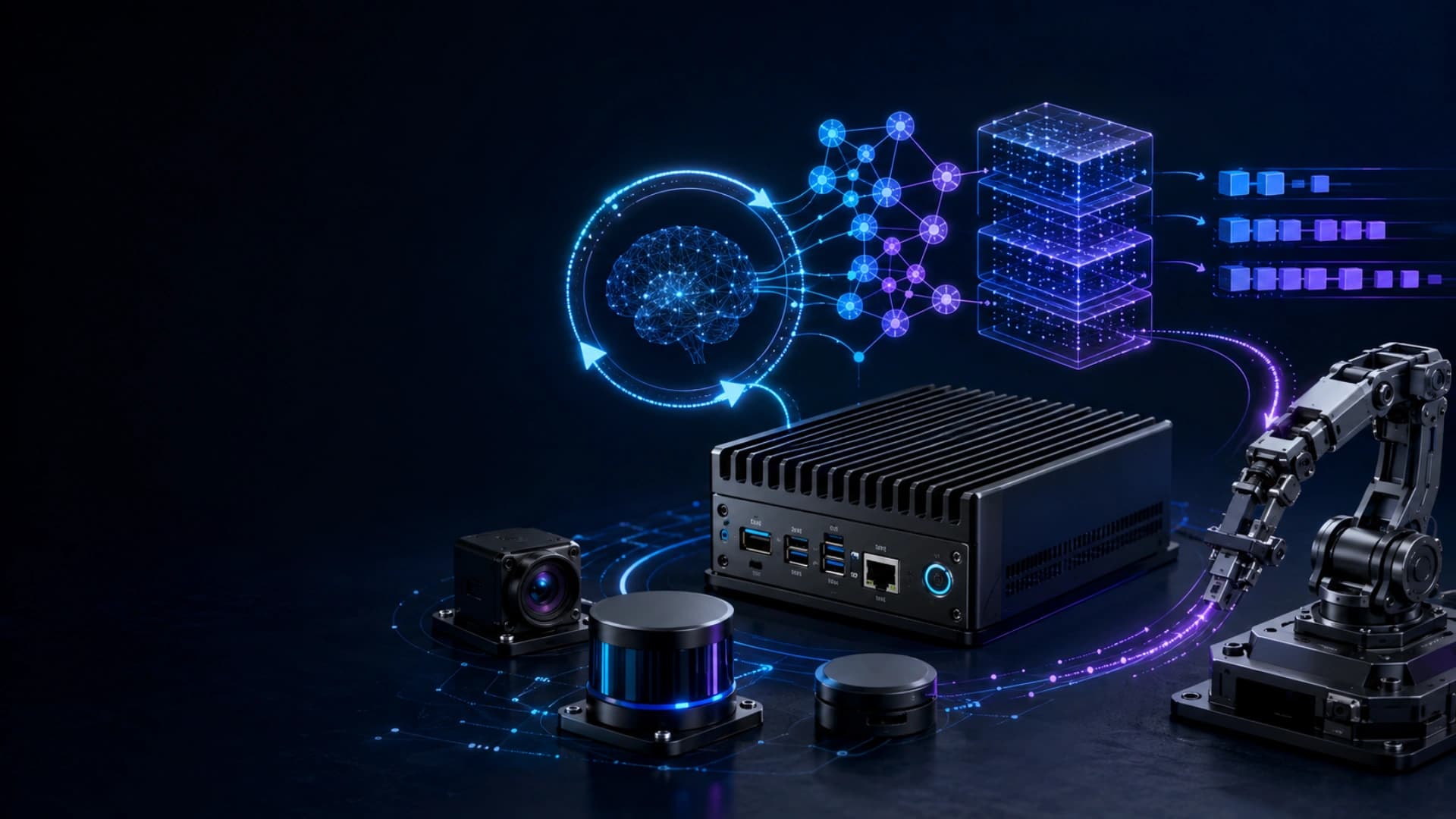
NVIDIA published a Jetson technical post on September 4, 2026, about moving reasoning and agentic AI that once needed a data center onto the edge. It is not a new model launch. It is a deployment guide for choosing smaller open models, applying quantization and speculative decoding, and placing the reasoning loop close to sensors, device logs, and physical systems.
The post compares two models. Nemotron 3.5 Lightning is a 30-billion-total-parameter mixture-of-experts model that activates 3 billion parameters per token. Qwen3.8-27B is a dense model that activates all 27 billion parameters per token. NVIDIA presents the former as a fit for response-heavy agents and the latter for fewer, harder decisions. The choice is about architecture, memory, generation speed, and workload shape rather than parameter count alone.
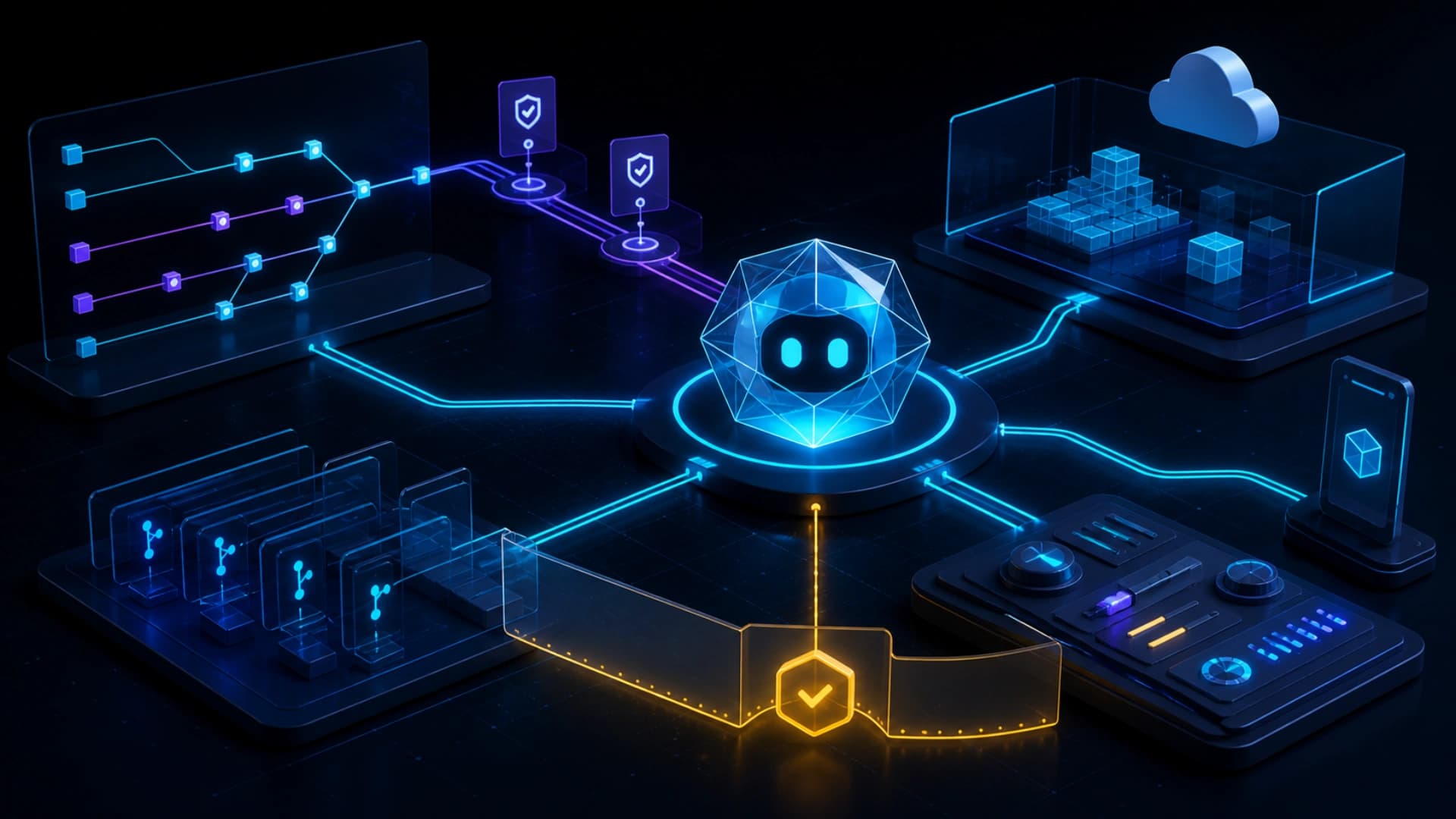
The edge-agent example monitors live sensor data and device logs, takes approved corrective actions, verifies results against predefined tests, and escalates exceptions to an expert. Running that loop locally can reduce network dependency and latency and keep some data off a data-center path. It does not, by itself, provide sufficient permissions, update controls, or auditability.
NVIDIA evaluates NVFP4 quantization and speculative decoding. NVFP4 lowers precision to reduce the data moved and processed per pass. Speculative decoding uses a smaller draft model to propose several tokens, then lets the main model verify them together. In NVIDIA’s Jetson tests, Qwen3.8-27B with NVFP4 and DFlash2 reached up to 6.28x the BF16 decode throughput baseline, while Nemotron 3.5 Lightning with DSpark reached 3.37x.
Those figures are not fixed multipliers for every application. NVIDIA says the fastest speculative configuration differs by model and throughput changes across writing, reasoning, summarization, and RAG workloads. Its measurements put Nemotron with DSpark at about 123.01 to 138.02 output tokens per second and Qwen with DFlash2 at about 27.69 to 34.44. Teams should rerun the comparison with their own prompts, tool calls, and response patterns.
The deployment path uses Jetson AGX Thor or Jetson AGX Orin, JetPack 7.2, NVIDIA Container Runtime, and vLLM, with llama.cpp also mentioned as an option. NVIDIA notes that quantization can change accuracy and may require quantization-aware training or distillation. Checkpoint compatibility and draft-token acceptance rates also determine whether speculative decoding produces a real benefit.
For long-running agents, the deeper signal is that the inference layer is shifting from a cloud endpoint toward a local decision loop. Local execution can make robots, in-cabin assistants, industrial monitoring, and remote operations more resilient. But deployment still needs tests for model behavior, tool permissions, offline state, updates, logs, and failure recovery. Faster tokens are only the entry point; an edge agent is useful when it can also stop safely when something goes wrong.