
On August 11, 2026, NVIDIA announced Nemotron 3.5 Lightning and NeMo Switchyard. The release targets two connected problems in multi-agent systems: handling high-volume repetitive work with smaller, faster models, and choosing a suitable model for each request without rewriting the application.
Nemotron 3.5 Lightning is a 30B-parameter mixture-of-experts model. NVIDIA positions it as a specialist model inside larger multi-agent systems, including always-on tool calls, data preparation, and other high-volume agent tasks. NVIDIA reports up to four times faster output and up to 30% faster agentic task completion than other models in its class on PinchBench. Those are vendor-reported benchmark results, so teams should re-run the comparison with their own tools and task set before adoption.
The model can be post-trained with NVIDIA NeMo using domain data, tools, and workflows. NVIDIA also says it will publish training data and techniques where licensing permits, and has released the Nemotron-RL-Agentic-Terminal-Pivot dataset for coding-agent post-training. That customizability can help teams fit a model to a workflow, but it also creates ongoing responsibilities for data quality, permissions, and model updates.
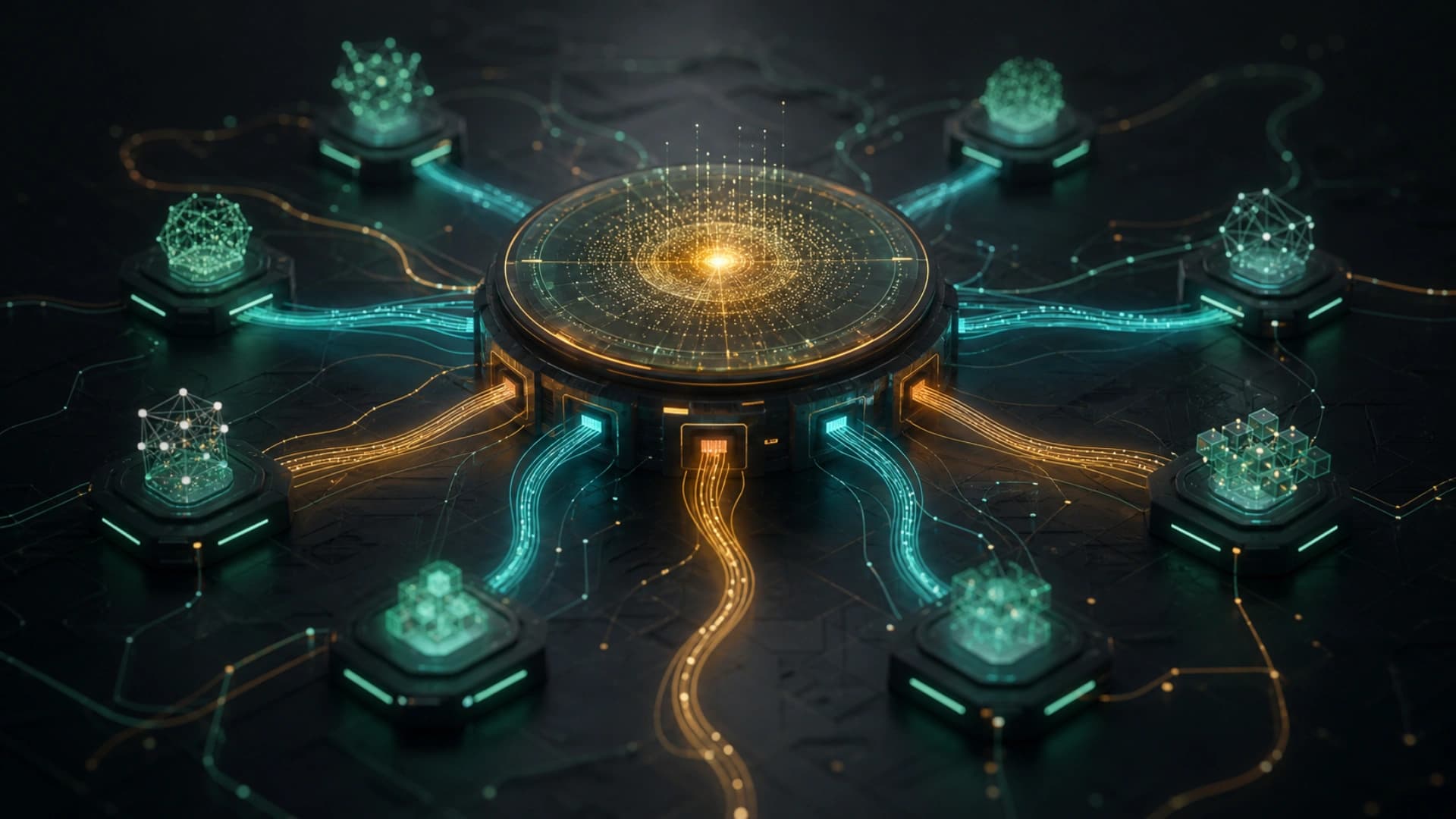
NeMo Switchyard is an open-source smart model-routing library for common agent tools. It can route requests across open, proprietary, and NVIDIA models, with tunable policies for quality, latency, and cost. Keeping this routing layer separate from the application gives a team room to introduce faster specialist models without changing every part of the agent workflow.
NVIDIA’s own benchmark says Switchyard maintained near-frontier accuracy while reducing task-completion cost to nearly one-third of using Opus 4.8 alone. That is an internal vendor benchmark, not a general cost guarantee. Routing results depend on prompts, tool failure rates, context length, caching, fallback rules, and each model’s pricing.
The broader signal is that model choice is becoming a runtime control plane for agents rather than a one-time provider setting. Simple classification or high-volume tasks can use a faster model, while difficult reasoning steps can escalate to a more expensive one. To make that split governable, a production system still needs to log the routing reason, model version, tool outcome, cost, and fallback path for every request.
NVIDIA says Nemotron 3.5 Lightning can run across RTX PCs, DGX Spark, DGX Station, Jetson, RTX PRO, data centers, and the cloud. That expands local, edge, and cloud deployment options, but it does not remove the need for driver management, quantization checks, model scanning, prompt-injection defenses, or data-loss controls. A model placed closer to sensitive data still needs least-privilege, auditable tool interfaces.
A sensible adoption path is to group tasks by success rate, latency, cost, and sensitivity, then define a reversible routing policy for each group. Vendor benchmarks can identify candidates, but the production gate should come from the team’s own traces, fixed regression set, and human review.