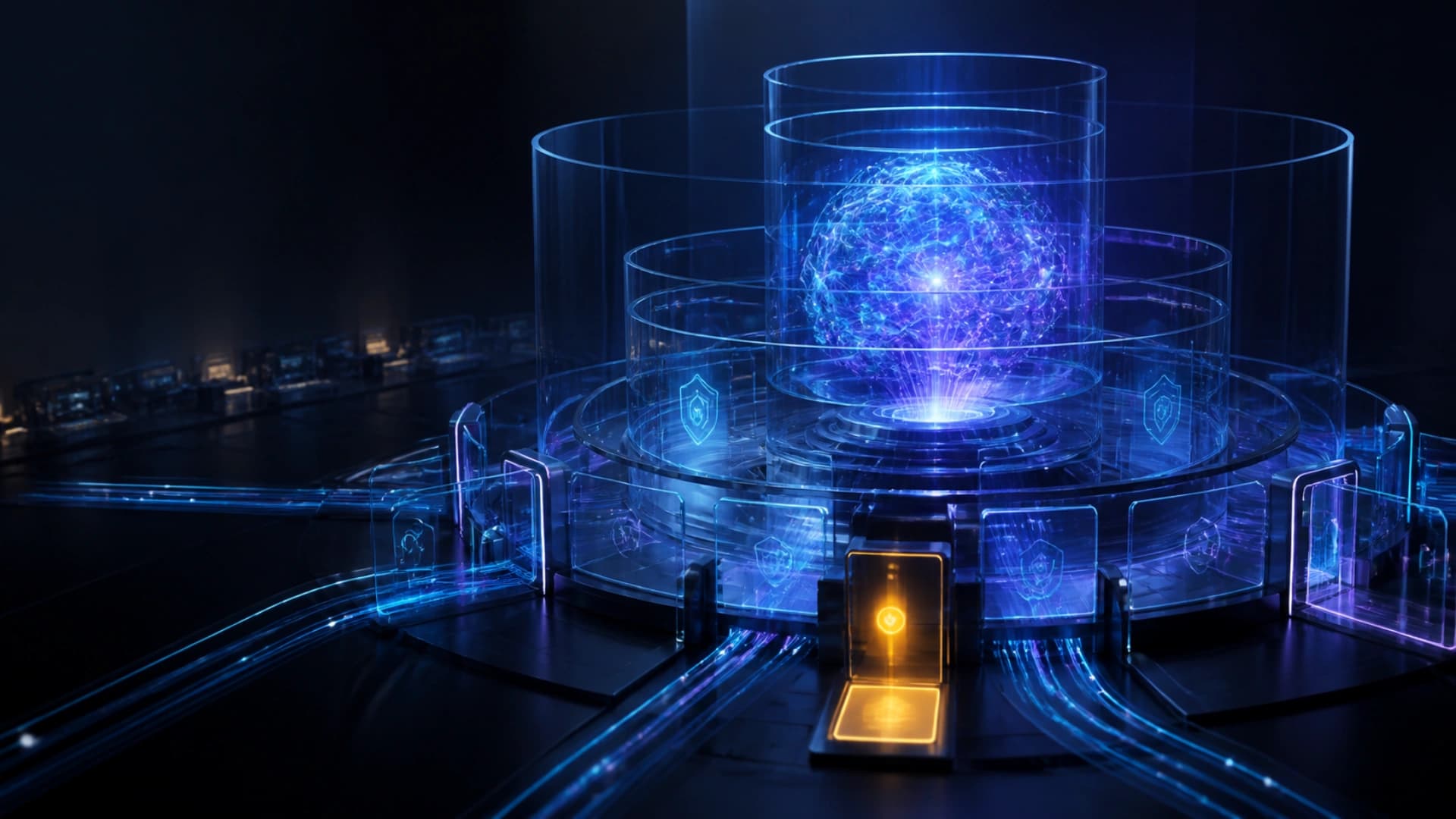

On July 27, 2026, NVIDIA and Safe Superintelligence Inc. (SSI), the research company founded by Ilya Sutskever, announced a long-term strategic partnership. The announcement includes an NVIDIA investment in SSI and access to the next-generation Vera Rubin platform. NVIDIA and SSI say the arrangement will increase SSI's available compute by an order of magnitude.
The news is not a launch of a publicly usable model. It is a closer link between a highly private research lab and a large-scale AI infrastructure provider. SSI has one stated goal and one product: safe superintelligence. The company is led by Sutskever and Daniel Levy. The announcement says SSI has spent the last two years pursuing a new research direction, but it does not disclose research details, a model schedule, or a product roadmap.
For SSI, more compute means more than additional GPUs. Larger training and experimentation capacity can support longer research cycles, broader evaluation, and more parallel trials of different approaches. Compute scale alone does not produce alignment, reliability, or safety. Methods, data, evaluation tooling, and deployment choices remain equally important.
For NVIDIA, the partnership also goes beyond hardware supply. The companies say they will collaborate on current and future NVIDIA compute platforms, giving NVIDIA access to SSI's insight into the direction of frontier AI research. That feedback loop can influence system design, but no independently measurable product improvement or commercial return has been disclosed.
The announcement uses product descriptions such as “best-in-class” and “next-generation,” and says Vera Rubin will increase SSI's compute by an order of magnitude. Those are statements in the joint press release. It provides no external baseline, deployment scale, or schedule that would let readers independently verify the size of the change, so the claim should not be treated as a completed capability gain.
The partnership also highlights a tension between safe-superintelligence research and scaled compute. More capacity can accelerate safety research, but it can also accelerate iteration on systems that have not been fully evaluated. If SSI later exposes a model or agent for public testing, the important evidence will include safety evaluations, permission boundaries, failure handling, and deployment constraints—not only hardware scale.
The firm conclusion for now is that NVIDIA is combining investment in SSI, Vera Rubin infrastructure, and long-term technical collaboration. Whether that becomes a new model capability, reproducible safety result, or product will depend on research and validation that SSI has not yet made public.