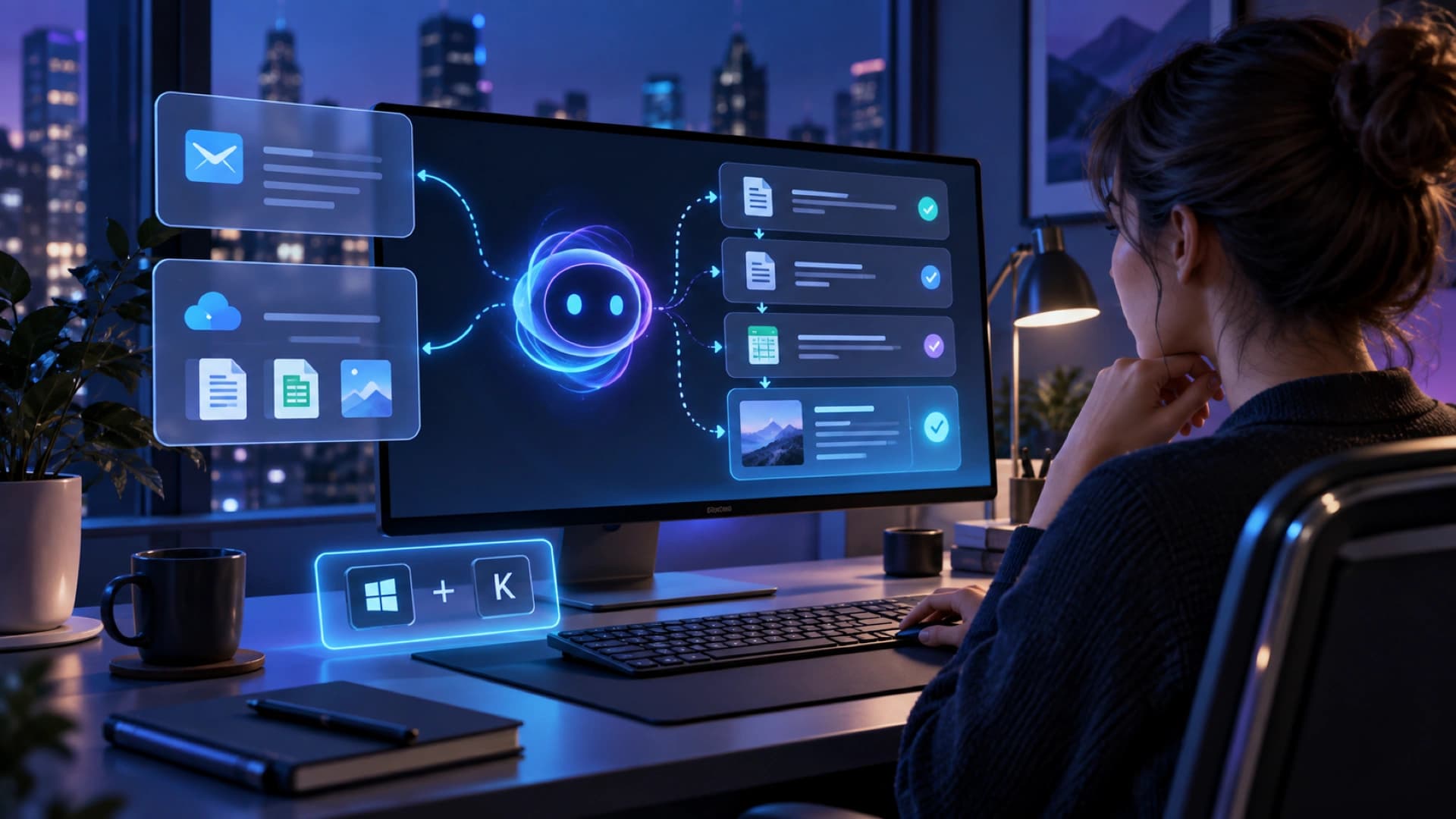
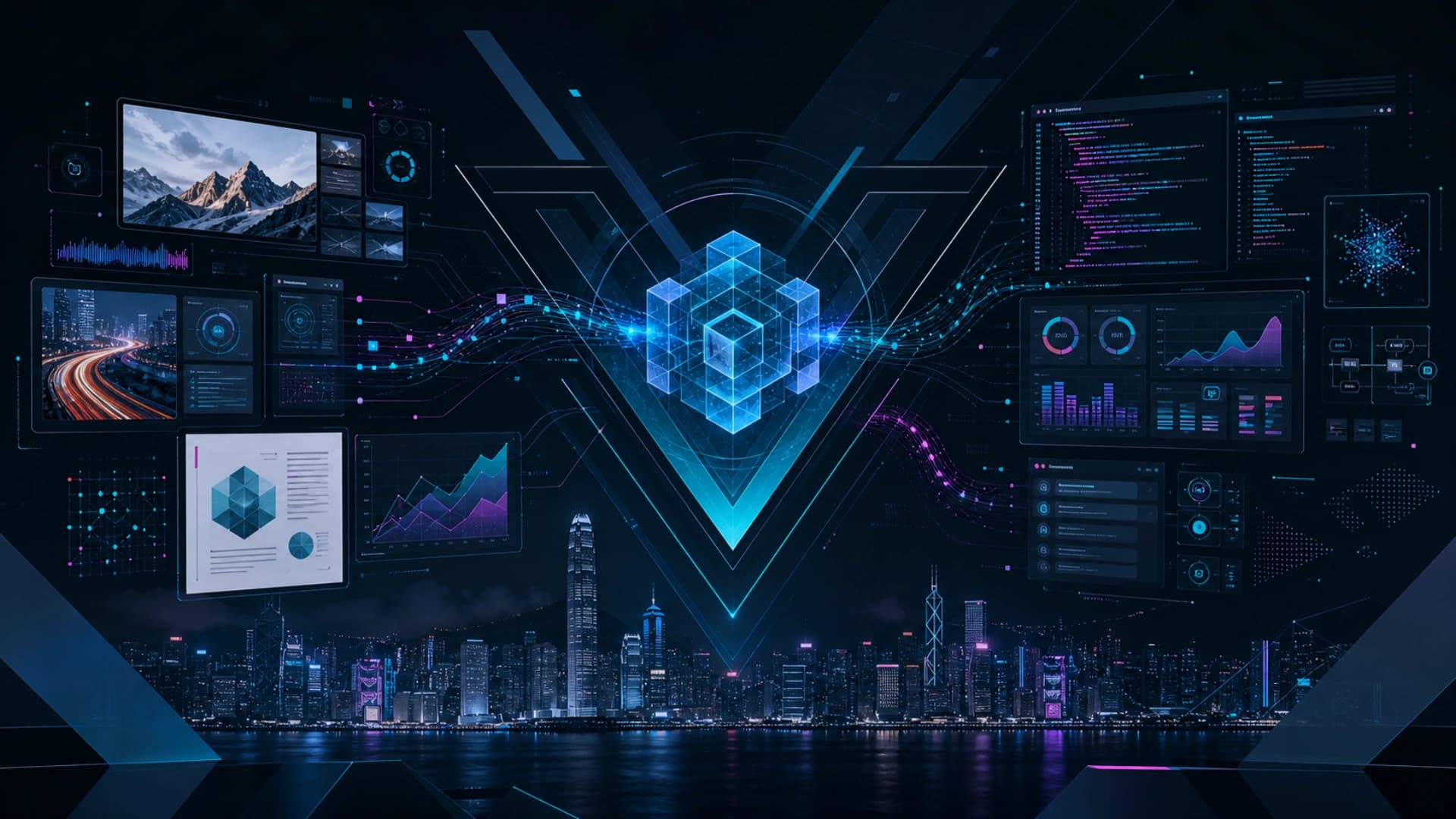
The important part of Qwen3.7-Plus is that multimodal capability is being placed directly inside the agent workflow, not treated only as a better image-question-answering score. Alibaba Cloud Community describes Qwen3.7-Plus as a multimodal agent model that unifies vision and language into one agent foundation for coding, tool use, productivity workflows, GUI operation, and visual reasoning.
The key description is the multimodal interactive hybrid agent. Qwen3.7-Plus can understand real-world scenes, read screen content, operate graphical interfaces, run CLI operations, and use environmental feedback for code generation, application manipulation, testing, validation, and iterative optimization. In practical terms, the agent loop is moving beyond reading and writing text. It is closer to seeing, thinking, writing, acting, and verifying.
The examples make that direction concrete. The Hybrid-Agent system reportedly ran continuously and stably for more than 11 hours while automating the full development cycle of an English vocabulary learning app, including requirements, coding, installation, test-case creation, GUI testing, parallel scenario testing, documentation updates, and version evolution. Another desktop-app example had the agent inspect the macOS Stocks app, generate SwiftUI code, connect a market API, compile and launch the recreated app, then pass ten functional verification tests.
The visual layer is also more than recognition. The article says Qwen3.7-Plus can use a code interpreter for visual tasks such as spotting differences, solving puzzles, navigating mazes, and assembling jigsaws. The model turns visual input into a computable representation, then writes and executes code to search, solve, or verify the answer. For business use, that points toward agents that can handle screenshots, receipts, tables, reports, posters, product images, and complex UI pages.
Another important signal is cross-harness generalization. The article lists integrations with Claude Code, OpenClaw, and Qwen Code, and emphasizes that the model can perform consistently across different agent scaffolds. That matters because future agent stacks are unlikely to be one vendor's tool alone. They will mix models, CLIs, IDEs, browser automation, MCP, and internal systems.
Qwen3.7-Plus shows multimodal agent competition moving from understanding interfaces to operating interfaces and delivering outcomes. When a model can move between GUI and CLI, write code from visual references, run tests, and verify results, enterprise expectations shift from content generation toward end-to-end workflow automation.