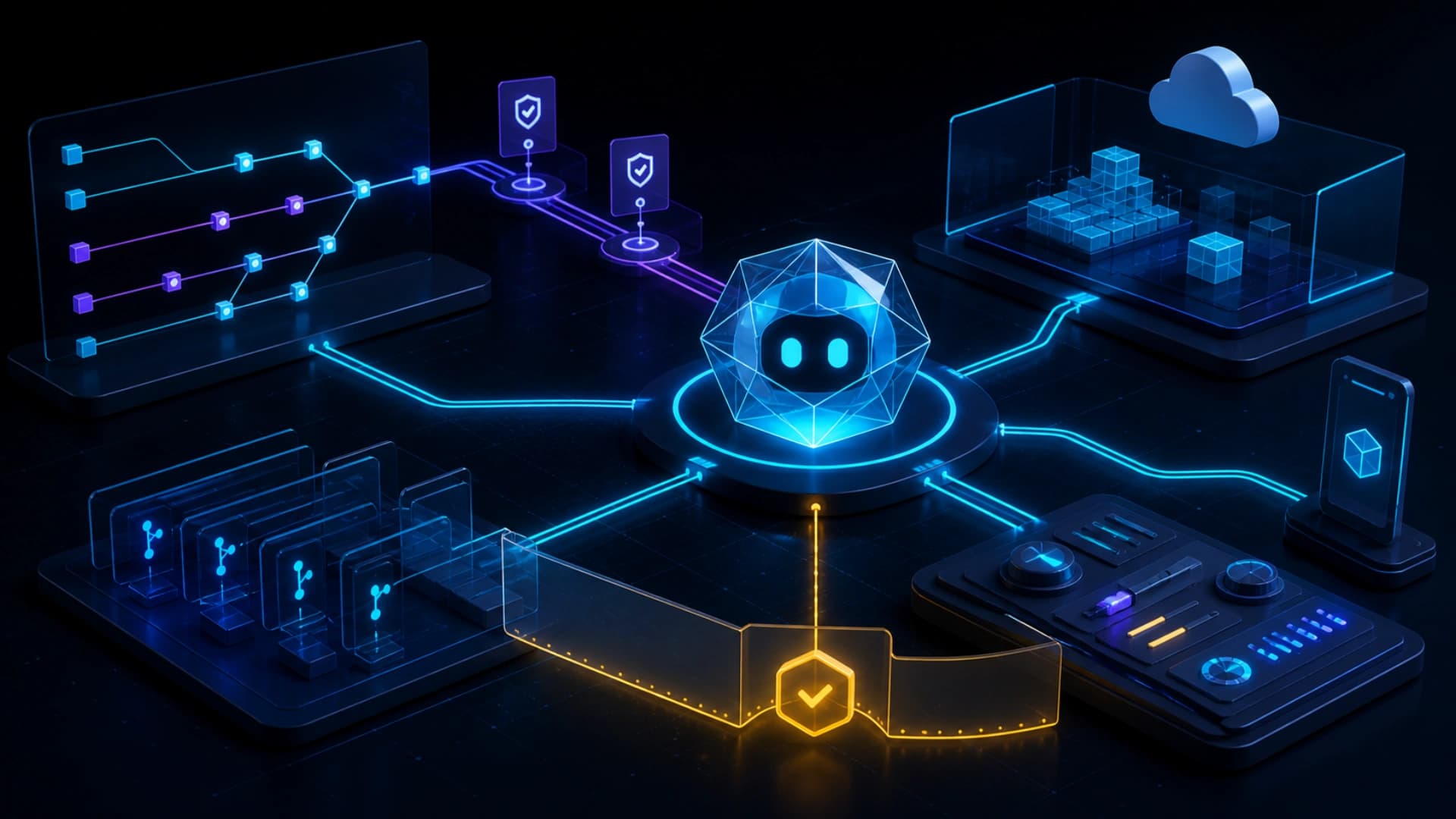

On August 12, 2026, Atlassian announced Code Context, bringing large-scale, multi-repository codebase understanding into the Teamwork Graph. The problem it addresses is not that coding agents cannot write syntax. It is that an agent often sees only the local workspace and misses related services, cross-team dependencies, historical decisions, and downstream impact.
Code Context indexes a codebase into Teamwork Graph so developers and agents can use it from IDEs, terminals, AI coding apps, Jira, and the Atlassian ecosystem. Search combines lexical search for exact functions or strings with semantic search for concepts that may not share the same keywords. The result is a path for an agent to locate the right code and reason about it alongside the surrounding work context.
Atlassian says the Teamwork Graph CLI can provide Code Context to Cursor, Claude Code, and Codex, while Rovo Chat can use it as a skill. Beyond repositories, an agent can query Jira work items, Confluence pages, Loom videos, and data from more than 50 connectors. For debugging, impact analysis, and onboarding, the goal is to let an agent see both why a piece of code exists and who depends on it before taking action.
Atlassian cites an internal benchmark in which agents enriched with Teamwork Graph context were 44% more accurate while using 48% fewer tokens. This is Atlassian's internal data, not an independent evaluation. The useful interpretation is that organized context may improve both answer quality and token efficiency, not that every team should expect the same percentages.
Permissions are central to the design. Administrators must opt in and enable code indexing, after which results are scoped to the permissions of each user or authorized agent. Atlassian says Code Context currently supports GitHub and Bitbucket repositories and respects existing SCM permissions. Organizations should still verify which repositories may be indexed, which agents can read them, and what happens when an index or permission is revoked.
Code Context is in early access and rolling out to customers through open beta. The direction is clear, but availability, product maturity, and governance details still need validation in each tenant. Atlassian also stresses that developers remain accountable for understanding changes, checking downstream impact, and deciding what ships. A context engine can reduce blind spots; it cannot replace code ownership.
The larger signal is that coding-agent competition is moving from who can write a code fragment to who can retrieve enough context under the right permissions and propose a verifiable change. If an agent searches across repositories, lists dependencies, checks prior decisions, and then generates or reviews code, the workflow becomes closer to an auditable engineering process than high-confidence guessing from local files.