GitHub's latest Copilot CLI update looks like a terminal tooling update, but the larger signal is that developer agent workflows are moving closer to everyday operations. The release includes an experimental terminal UI, a rubber duck review agent, prompt scheduling, and voice input. Together, they point to AI coding agents moving beyond IDE sidebars and into the terminal workbench.
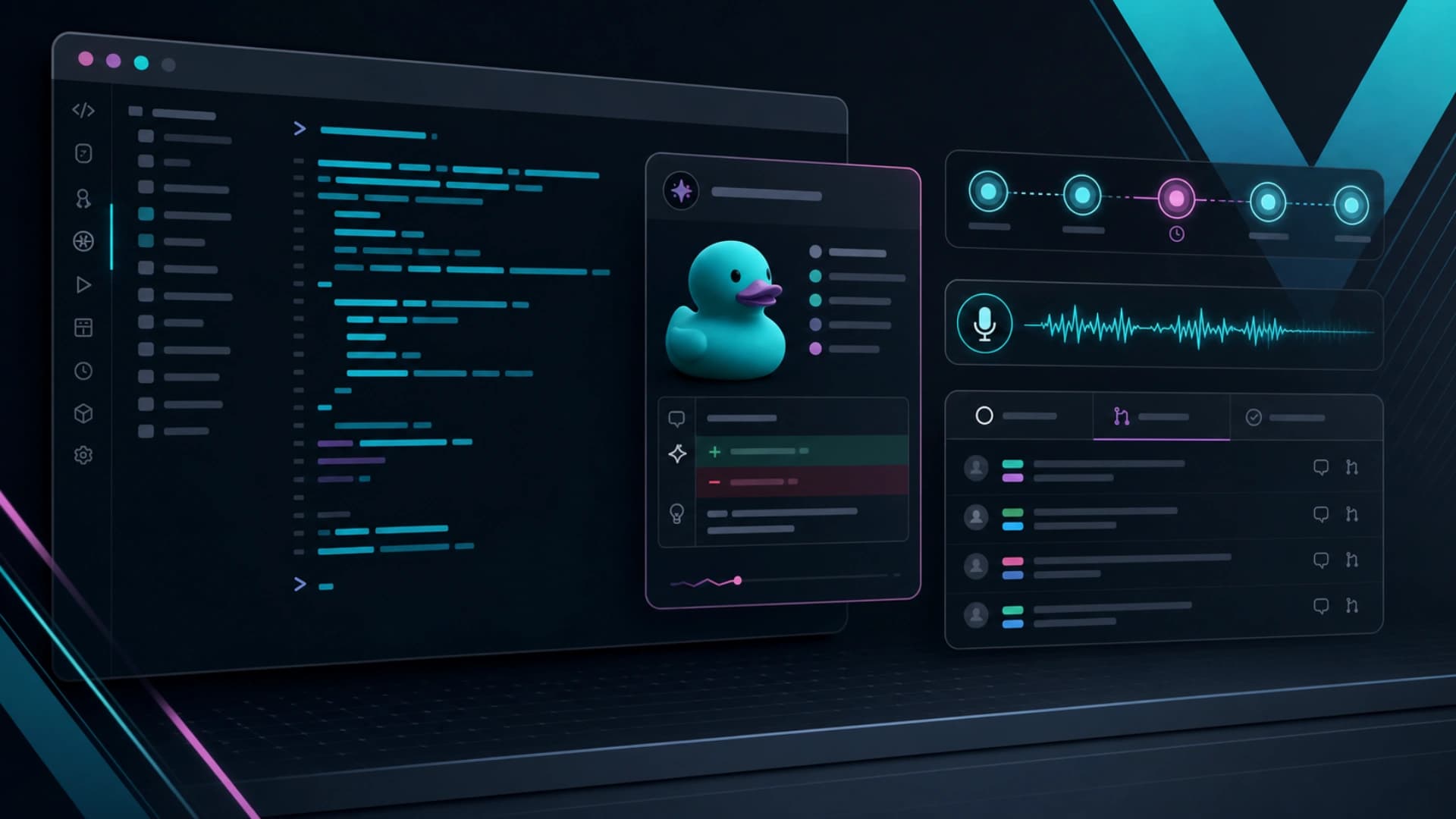
The new terminal experience focuses on a cleaner layout, theme-aware semantic colors, responsive components, and tabs. When the CLI runs inside a GitHub repository, users can switch between Session, Issues, Pull requests, and Gists without leaving Copilot CLI. That matters because agents often need issue context, pull-request feedback, and repository state, not only a prompt.
Rubber duck is the more interesting agent design. It is a built-in CLI agent that acts as a constructive critic. The main CLI agent can hand over its current plan, design, implementation, or tests for review. The reviewer looks for blind spots, design flaws, and substantive issues, then returns concrete feedback for Copilot to consider before continuing. That puts second-opinion review inside the agent loop instead of waiting until the end.
Prompt scheduling pushes the CLI toward longer-running background work. The new /every and /after commands can schedule a prompt or skill in the current CLI session. One runs repeatedly, while the other runs once after a delay. GitHub added a June 3 editor's note clarifying that prompt scheduling is part of /experimental. Even as an experiment, the direction is clear: agents are starting to handle tasks that happen later or recur over time.
Voice input is also notable because it runs locally. GitHub says hands-free dictation records audio on the user's machine, with the first setup downloading a runtime and selecting a speech-to-text model. For developers already working in the terminal, local voice input can reduce the friction of handing tasks to an agent while keeping the audio local.
The broader signal is that coding agents are becoming observable, schedulable, criticizable, and easier to delegate to quickly. When the terminal includes issues, pull requests, a review agent, scheduled prompts, and local voice input, agentic development is no longer only about generating code. It becomes part of the developer's operating workflow.