
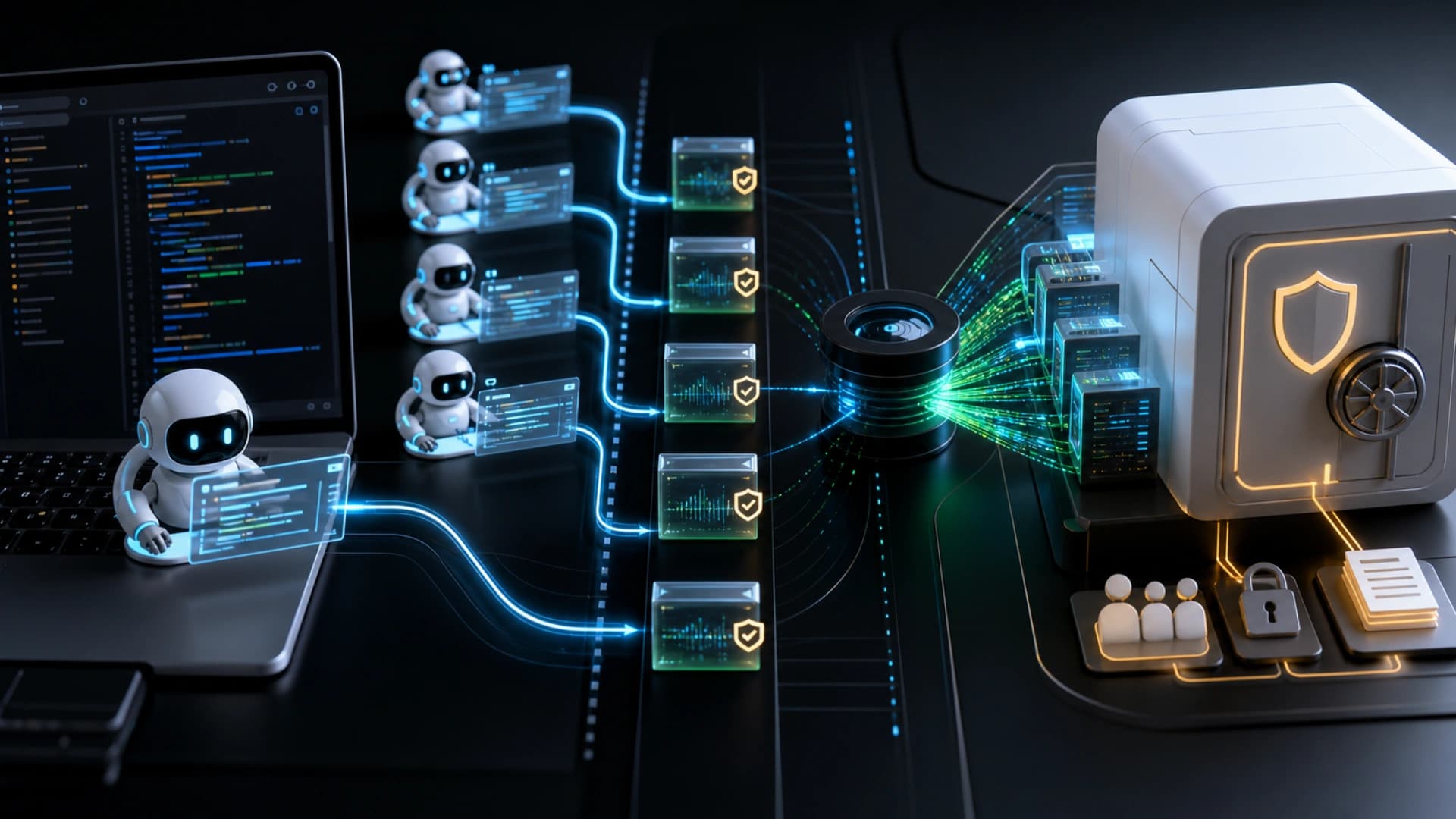
GitHub announced enterprise-managed OpenTelemetry export for GitHub Copilot on July 8, 2026. It is not a flashy model launch, but it matters for enterprise coding agents. Once an AI agent starts doing real work inside an IDE and CLI, teams need to know what it did, where telemetry is sent, what content is captured, and who can change those settings.
The update lets organizations mandate the approved collector where Copilot telemetry is exported, instead of requiring each developer to set OTEL_* environment variables manually. The configuration is delivered through the telemetry block in enterprise-managed settings and applies to both the Copilot Chat extension in VS Code and the agent host process that powers Copilot CLI.
Administrators can control the OTLP export endpoint, transport protocol, OTel service name, resource attributes, exporter headers, and whether prompt, response, and tool content is captured. A managed value takes precedence over environment variables and user settings, moving the behavior from personal configuration into organizational governance.
GitHub also calls out an important security detail: managed exporter headers apply only to the Copilot Chat extension's OTLP exporter and are not passed through environment variables to tool subprocesses spawned by the agent host. That matters because a telemetry header may contain an authentication token for the collector. Passing it into subprocess environments would create unnecessary leakage risk.
This changelog fits with recent Copilot updates around enterprise managed settings, MDM deployment, usage metrics, budgets, and session management. GitHub is filling in the management layer required after agent adoption: who can use it, which model can be used, how activity is observed, how spending is limited, how sessions are tracked, and how settings are distributed centrally.
For developer teams, OpenTelemetry is not only about dashboards. The useful part is putting agent behavior into existing observability pipelines, so platform teams can inspect latency, errors, tool use, privacy settings, and abnormal patterns. If an agent is a black box that merely writes code, it is hard to bring into production engineering culture. If it has traces, metrics, and governed settings, it starts to look like a real engineering system.
The update also points to the next competitive axis for AI coding agents. It is not only who generates code faster. It is who can be monitored safely by enterprises. When an agent host can call tools, run CLI commands, read and write repositories, and produce long-running sessions, observability, policy, and secret handling become as important as model capability.
The headline may be telemetry configuration, but the deeper topic is enterprise agent governance. GitHub is moving Copilot from a personal developer assistant toward an agent layer that can fit into enterprise monitoring, compliance, and platform engineering processes.