
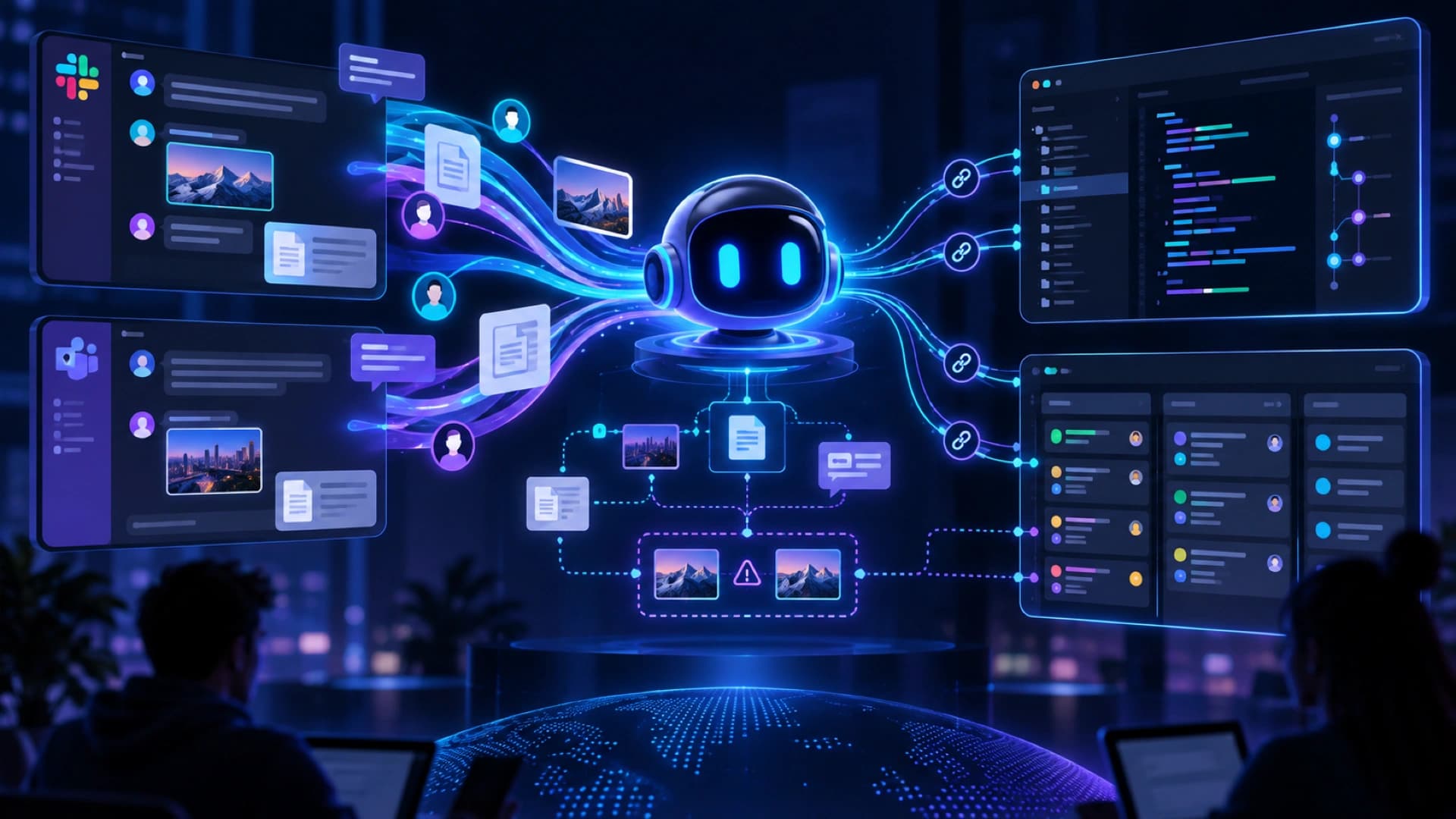
GitHub updated Copilot for Slack and Microsoft Teams on September 25, 2026, with a focus on carrying more conversation context into GitHub work. Slack can use supported files, attachments, and message links; Teams adds inline images, forwarded-message context, and channel and thread history.
Copilot now checks for similar issues before creating a new one, includes direct links to the resulting work, and keeps a link back to the originating discussion. The two-way trace makes it easier to understand where a decision came from and can reduce the chance that the same problem is filed from multiple conversations.
Users can switch models for the next message and keep that choice through the conversation. Slack also supports default owners and repositories. These controls bring model selection and work routing into team communication, but they do not mean Copilot automatically understands every repository’s policy or risk profile.
GitHub also reports clearer implementation-plan status, better handling of interrupted or stale replies, more predictable reconnection after idle periods, and safer repository switching. Teams is more reliable at retaining thread history and avoiding duplicate answers, while Slack improves plan recovery and repository selection. These changes target state drift in agent workflows rather than only the quality of prose responses.
The features are in public preview for GitHub Copilot Business and Enterprise. Usage counts against existing Copilot entitlements and can be managed through cloud-agent budgets. Organizations should verify that administrators have enabled the cloud-agent policy and cloud sandboxes and that the capabilities have reached their workspace.
The broader workflow shift is from chat as a notification surface to chat as a task surface. A conversation can become a requirement, the agent can turn it into an issue, plan, or code task, and the result can remain connected to the original context. Teams should still define repository, branch, permission, and review rules and test interruptions, duplicates, and retry behavior.