
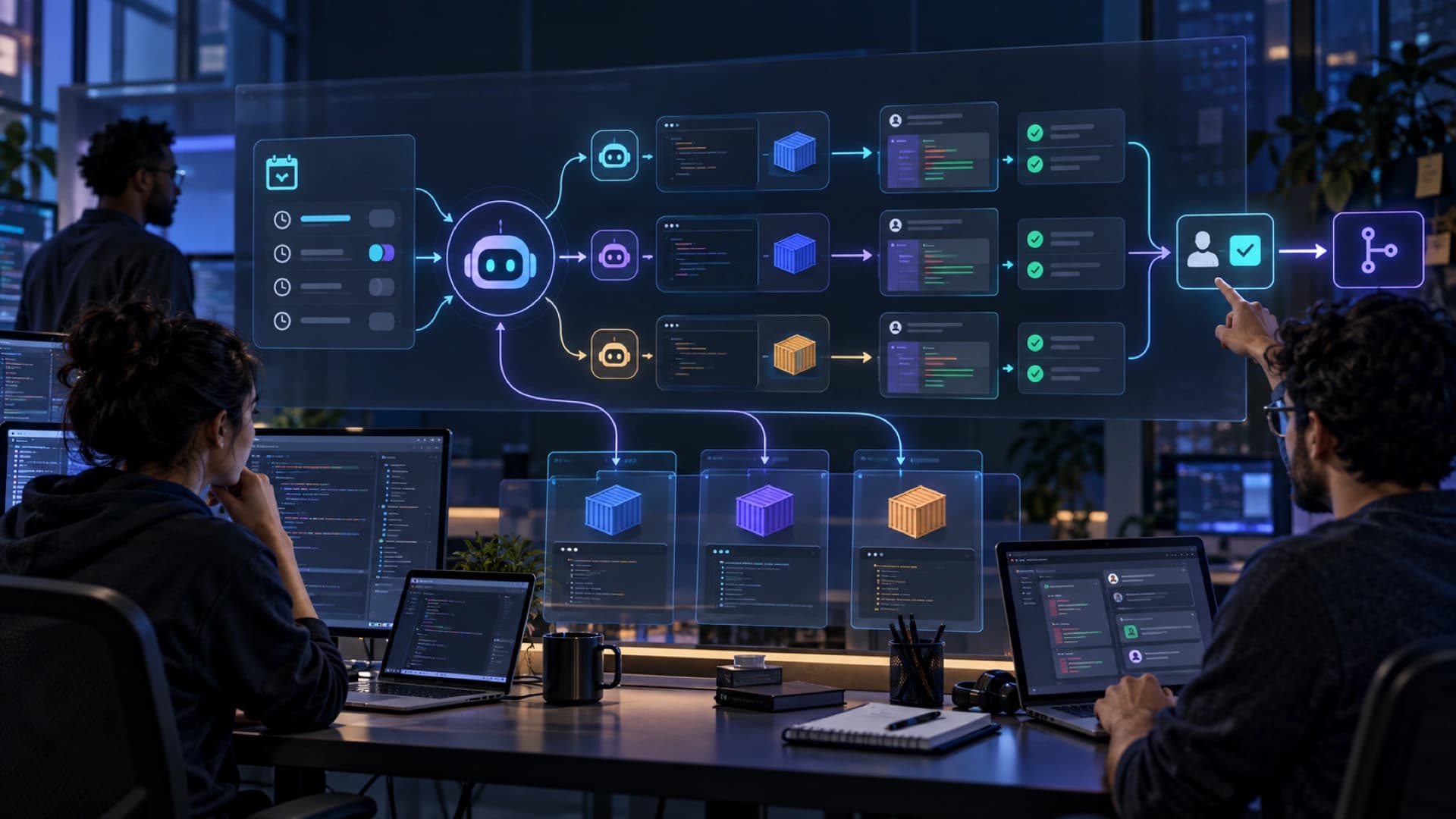
On October 1, 2026, GitHub summarized the GitHub Copilot changes shipped across VS Code 1.136 through 1.140. The theme is not one model release. It is a workflow that connects agent-driven development from implementation to pull request merge: automations handle repeatable work, Agent Merge helps finish the change, and session management keeps multiple tasks traceable.
New recurring automations in the Agents window can run hourly, daily, or weekly, or be started on demand. Agent Merge is in preview and can handle review feedback, failed checks, merge conflicts, and workflow reruns. It should still be treated as a controlled collaboration stage, not as permission for an agent to make unrestricted, irreversible changes to a main branch. Branch protection, permissions, tests, and human approval remain the responsibility boundary.
The same Agents window can open a pull request form from a Copilot, Claude, or Codex agent session, allowing a user to inspect and edit the title and description and choose draft or merge options. Related chats and sessions can be organized hierarchically. Completed sessions can be marked as done or cleaned up automatically, while an application badge surfaces new results, input requests, and pull request checks. Together these details address an operational problem: agent work can fragment, and completed work can go unowned.
For environments, VS Code can start Dev Container sessions from the Agents window and use the project’s configured tools and dependencies across SSH, Tunnel, and WSL. A quick chat started without a workspace can later attach to a local folder. Codex conversations from the ChatGPT app can continue in VS Code, and GitHub issue or pull request URLs can be attached as chat context. More project context can improve the task, but it also raises the importance of access control and environment isolation.
HydraFusion lets eligible users select models and workflows for automatic coordination in a research preview. Like recurring automations and Agent Merge, it is not a generally stable contract. Scheduled agents need explicit stop conditions, spending limits, error notifications, least-privilege access, and reversible outputs, especially when they can edit code or open pull requests.
The signal from this VS Code update is that coding agents are moving from one-off conversations toward continuous work management: schedule, execute, verify, submit, and merge. The key adoption question is not how many agents a team can run. It is whether every stage has clear inputs, outputs, review points, and ownership, with people retaining control over merges and production changes.