
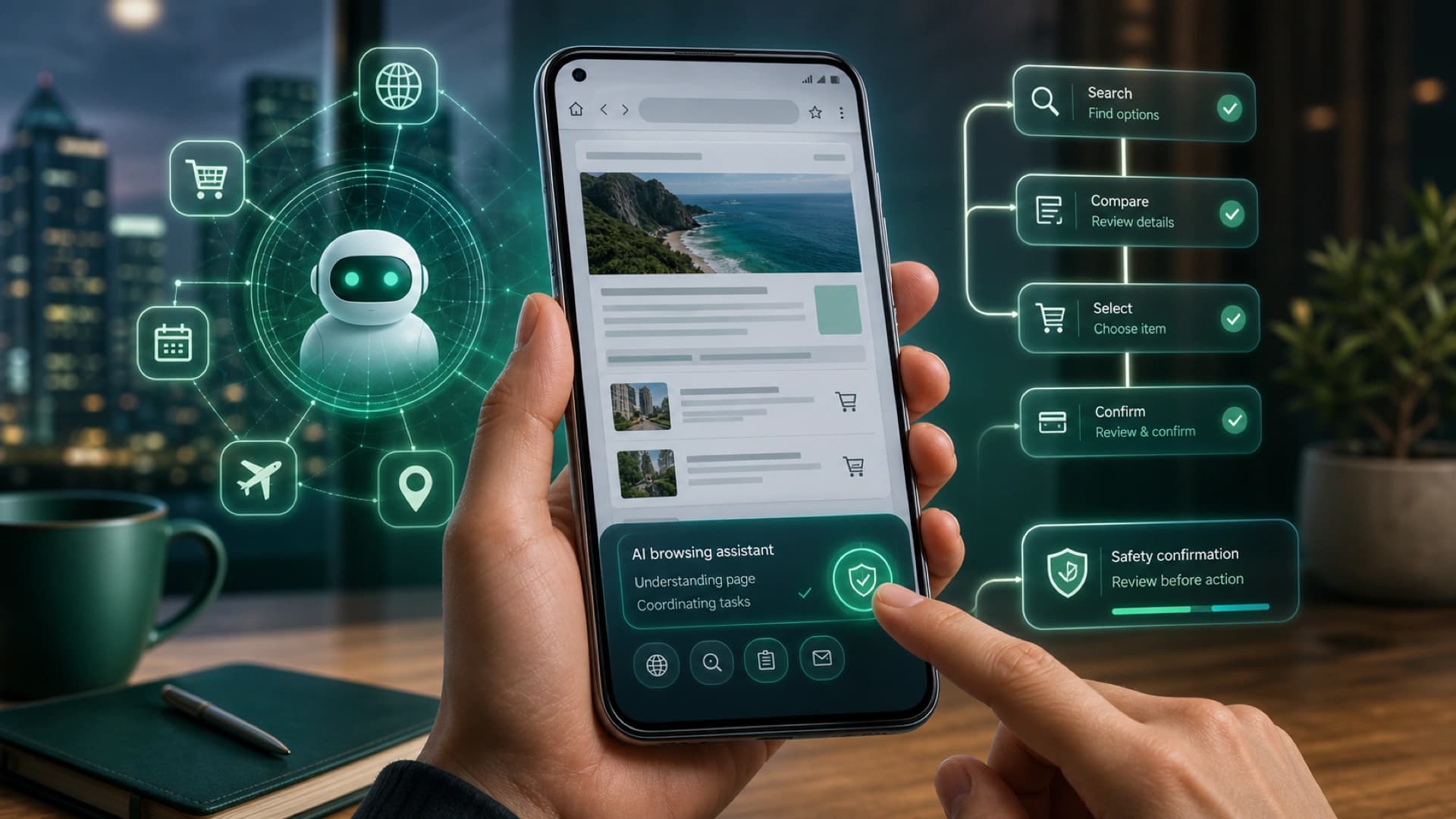
On May 12, 2026, Google announced that Gemini in Chrome is coming to Android, including auto browse. This deserves attention because it is not only Gemini moving onto another phone surface. It turns the browser into an agentic entry point that can understand pages, connect to apps, and handle tasks.
Google says Chrome on Android will expose a Gemini icon in the toolbar. Users can ask questions about the current page, summarize long articles, or request explanations of complex topics without switching apps. That context matters because the AI is no longer answering in a separate chat window. It is reading the page the user is actually viewing.
Gemini in Chrome also connects to Google apps. It can add recipe ingredients to Keep, create events in Calendar, or find relevant information in Gmail. That cross-app layer is what separates agentic browsing from ordinary summarization. The browser starts to become a task coordination layer, not just a reading tool.
Google is also adding Nano Banana inside Chrome, letting users create or modify images from the browser. Examples include turning a page into an infographic or editing a room image from a property listing. That shows browser AI moving beyond text into a workflow that combines content understanding, image generation, and immediate editing.
Auto browse is the most agent-like feature. Google describes Chrome handling repetitive web tasks such as reserving parking or updating orders. The value is not only saving a few clicks. It is that the browser can begin to execute multi-step work across websites on the user's behalf.
The safety boundary is just as important. Google says the features use the same desktop security protections against emerging threats such as prompt injection. Auto browse is also designed to ask for confirmation before completing sensitive tasks such as purchases or social posts. That balance between convenience and final user control is central to mainstream consumer agents.
Gemini in Chrome on Android will start rolling out at the end of June in the United States on selected Android 12 or higher devices. Auto browse will roll out to U.S. AI Pro and Ultra subscribers on selected devices. The broader signal is clear: agentic browsing is moving from desktop demos into a mainstream mobile browser.