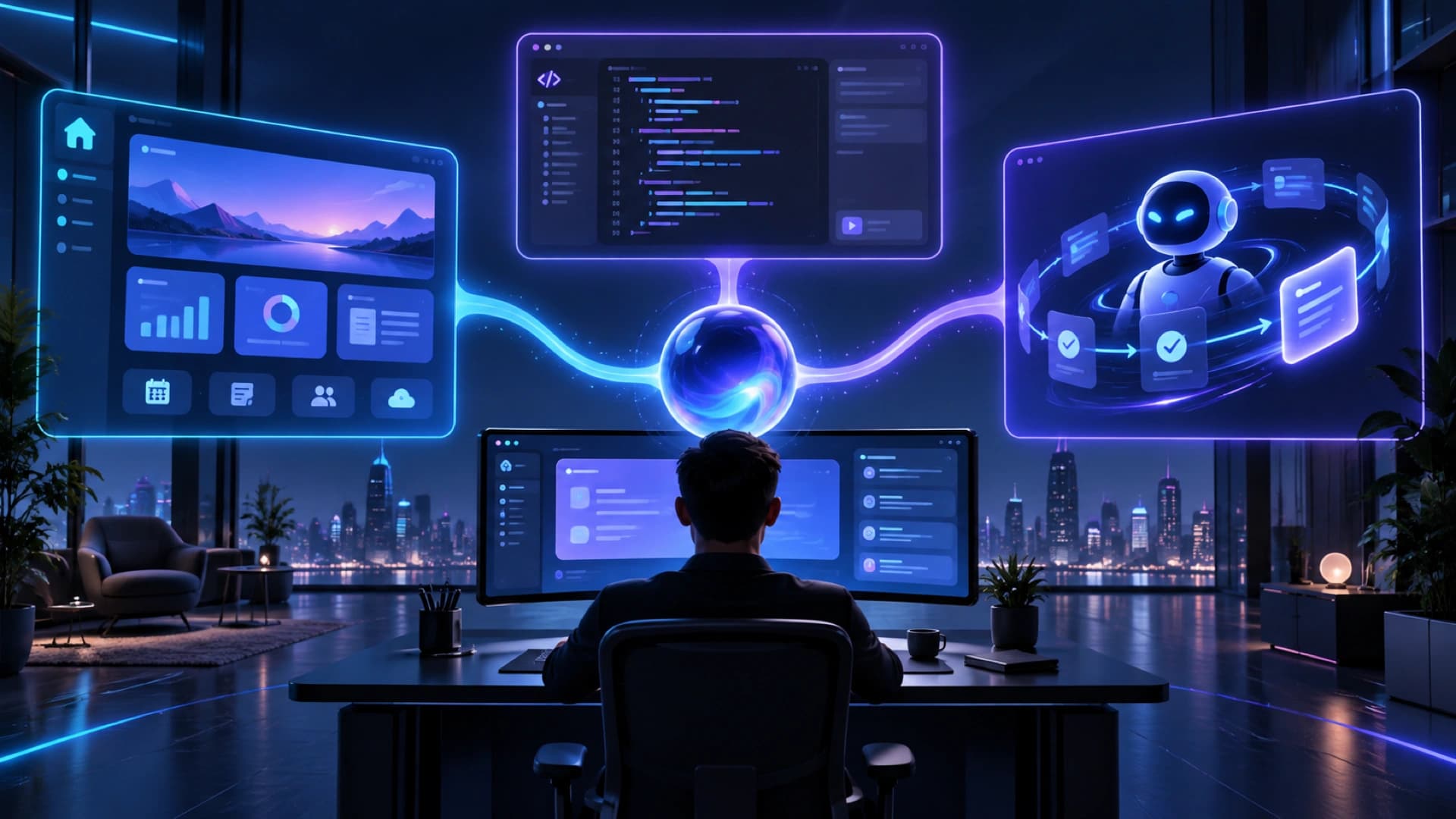

Google announced on September 23, 2026, that a new wave of Connected Apps is beginning to roll out in Gemini. The premise is simple: people can manage projects, organize data, create visual work, build websites, or plan parts of daily life without jumping between as many tabs.
The integrations are grouped into three areas. Productivity includes Airtable, Linear, monday.com, PandaDoc, Wispr AI, and Zoho for projects, databases, documents, and notes. Creativity includes Adobe, Picsart, Squarespace, and Webflow for visual assets and websites. Lifestyle includes apartments.com, Experian, Peloton, and SeatGeek for housing, credit, workouts, and events.
Google says users can connect apps through Gemini settings, or bring them into a conversation with an @ mention or a direct request. That moves Gemini from generating an answer toward completing a next step inside an existing service. The value will depend on whether context, permissions, and the result of an action can travel back to the original workflow.
For workflow design, Connected Apps make natural language a cross-tool entry point. A project request could read progress from Linear, organize records in Airtable, and then hand a brief or website asset to a creative tool. That can reduce app switching, but it also makes data boundaries and write permissions more important.
The announcement says the rollout is beginning; it does not imply that every region, account, or capability is available at once. Read, create, edit, and payment-related actions may carry different permissions, confirmations, and terms. A connected app should not be treated as a license for an agent to do anything without approval.
A safer adoption path is to start with read-only, reversible, low-risk work such as summarizing project status, organizing notes, or creating a design draft. Sending messages, making purchases, publishing publicly, or changing production data should retain step-by-step confirmation, activity records, and human review.
The larger significance of Gemini Connected Apps is that AI workflow competition is moving beyond the model into the tool network around it. As more services become callable from one conversational surface, the useful questions are whether data moves cleanly, permissions remain legible, and people can recover quickly when an agent makes a mistake.