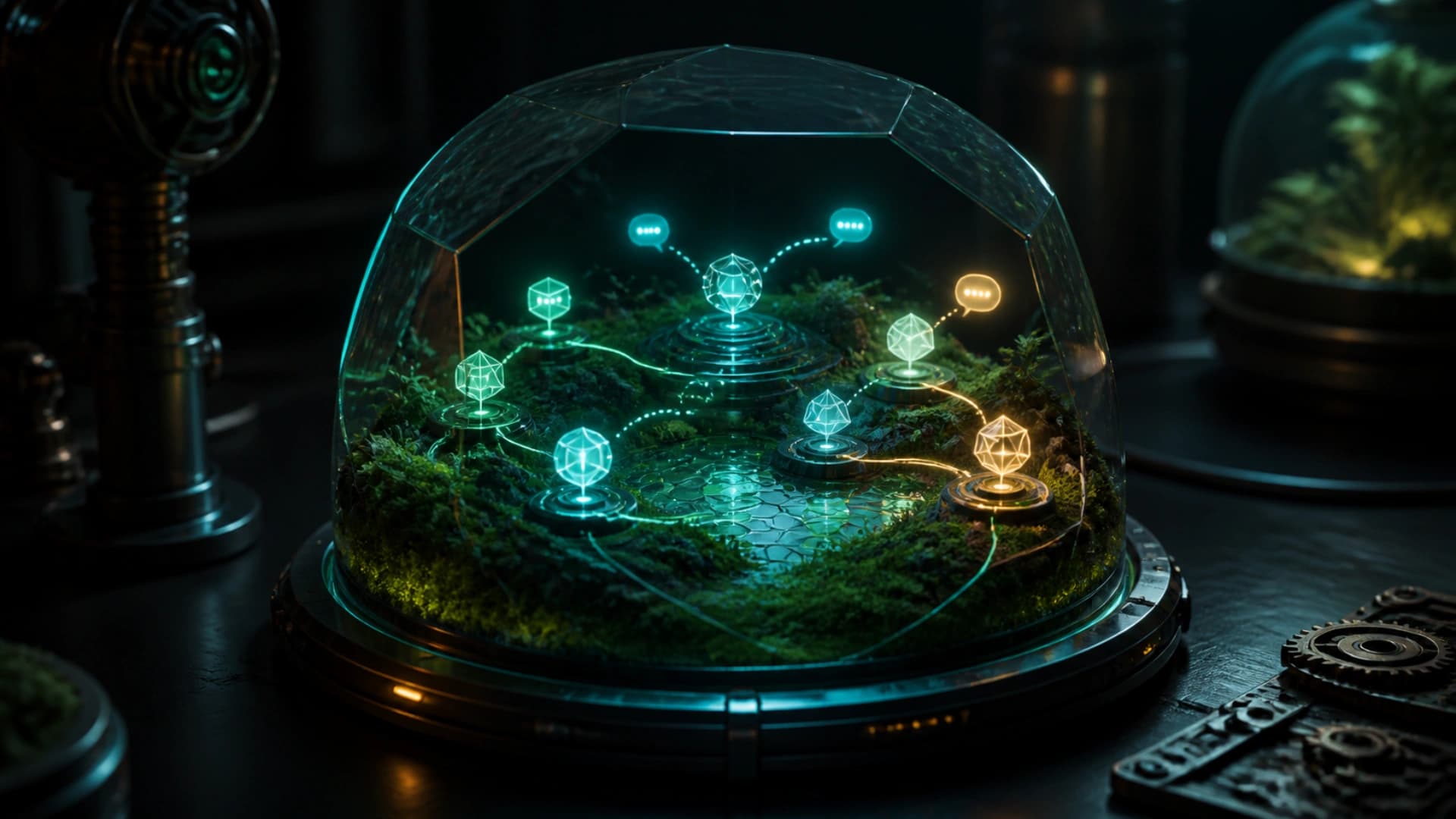
Microsoft Command Line introduced Agent Terrarium on August 7, 2026, as an experimental open-source desktop companion app. It places agents in an ambient world with movement, physics, social events, and environmental changes, so people can observe how an agent senses and responds instead of seeing only the final text in a chat window.
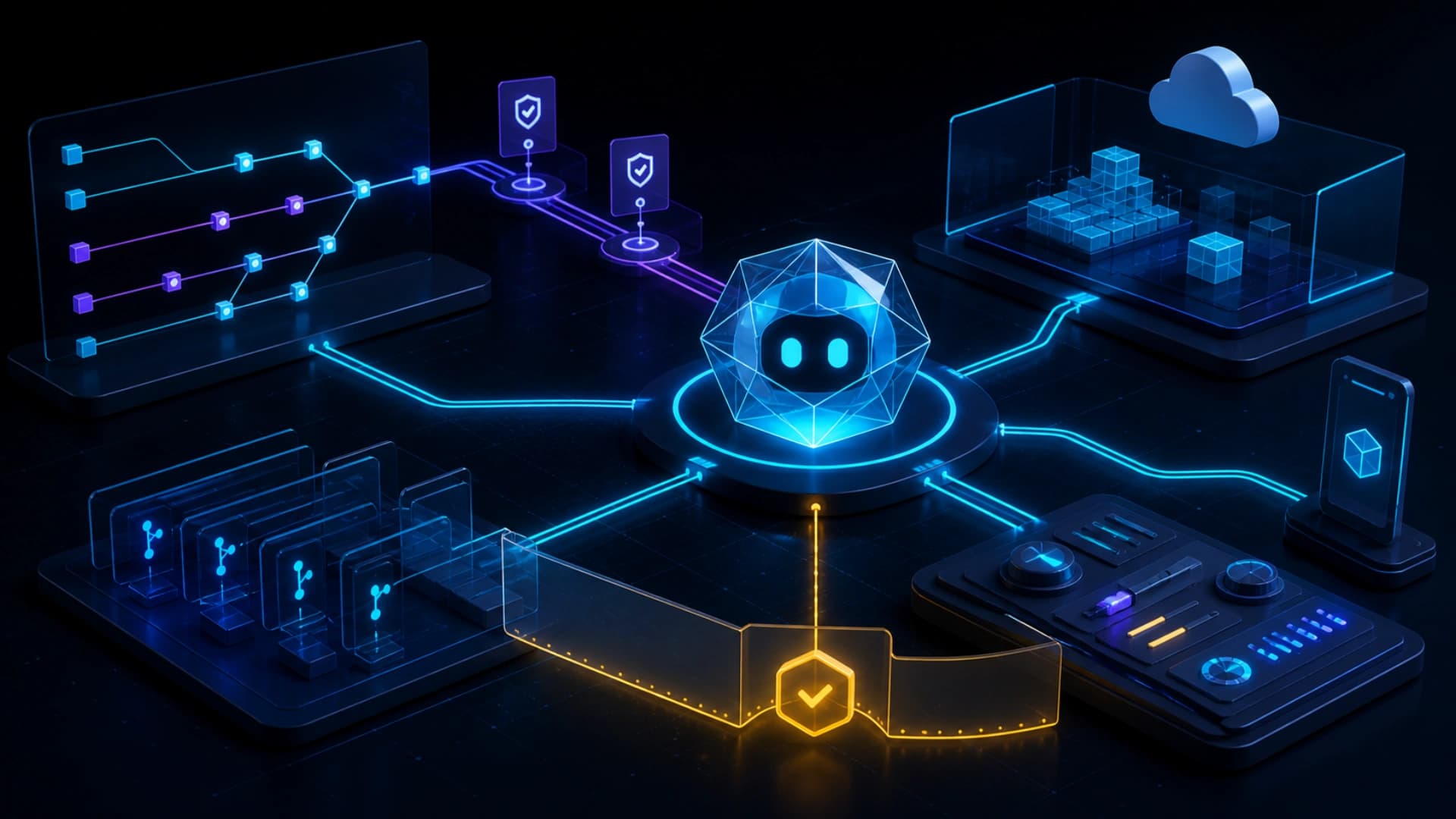
The simulation is written in Rust, while React handles the view, with Tauri connecting the two. Microsoft says the simulation, physics, AI dispatch, and game logic run in Rust at 20 Hz. React polls world state through Tauri IPC and renders it with Canvas 2D. Separating the renderer from the simulation also allows the same `terrarium-sim` to drive a desktop GUI, a terminal UI, or a VS Code extension that is still in progress.
Each agent can independently specify its backend, model, system prompt, awareness level, and working directory. The article lists GitHub Copilot through the Copilot SDK, OpenAI-compatible endpoints, and an API-free Echo/NPC option. This bring-your-own-model design avoids binding the experiment to one provider, but model requests, working directories, and tool permissions still need per-agent review.
Agents have four awareness levels. Level 0 receives direct messages only. Level 1 sees world events. Level 2 sees social events. Level 3 receives full world snapshots and can perform actions such as `say`, `emote`, `move_to`, and `run_away`. Making the visible world and available actions explicit levels is easier to measure than sending every piece of context to every model at once.
The world can also change its theme, weather, and music. Gear and file drops can bring content into the terrarium, while packages are declared as JSON under `~/agent-terrarium/packages` for extending scenes and objects. That is useful for experimentation, but if a file drop exposes local data to an agent, the data scope, working directory, and model provider’s transfer boundary should be checked first.
Agent Terrarium is currently better understood as a research-oriented toy and open-source project for human-agent interaction than as a mature enterprise agent platform. Its value is making perception, social events, state updates, and actions visible in an environment that can be inspected and replayed. That gives teams a way to ask when an agent knew something and why it acted, rather than only comparing chat answers.
The model output should still be treated as untrusted input. Before giving an agent access to files, a shell, or external tools, restrict its working directory, log every action, isolate test data, and require human approval for irreversible operations. If the world is later connected to real workflows, observability and permission control will matter more than the ambient interaction on screen.