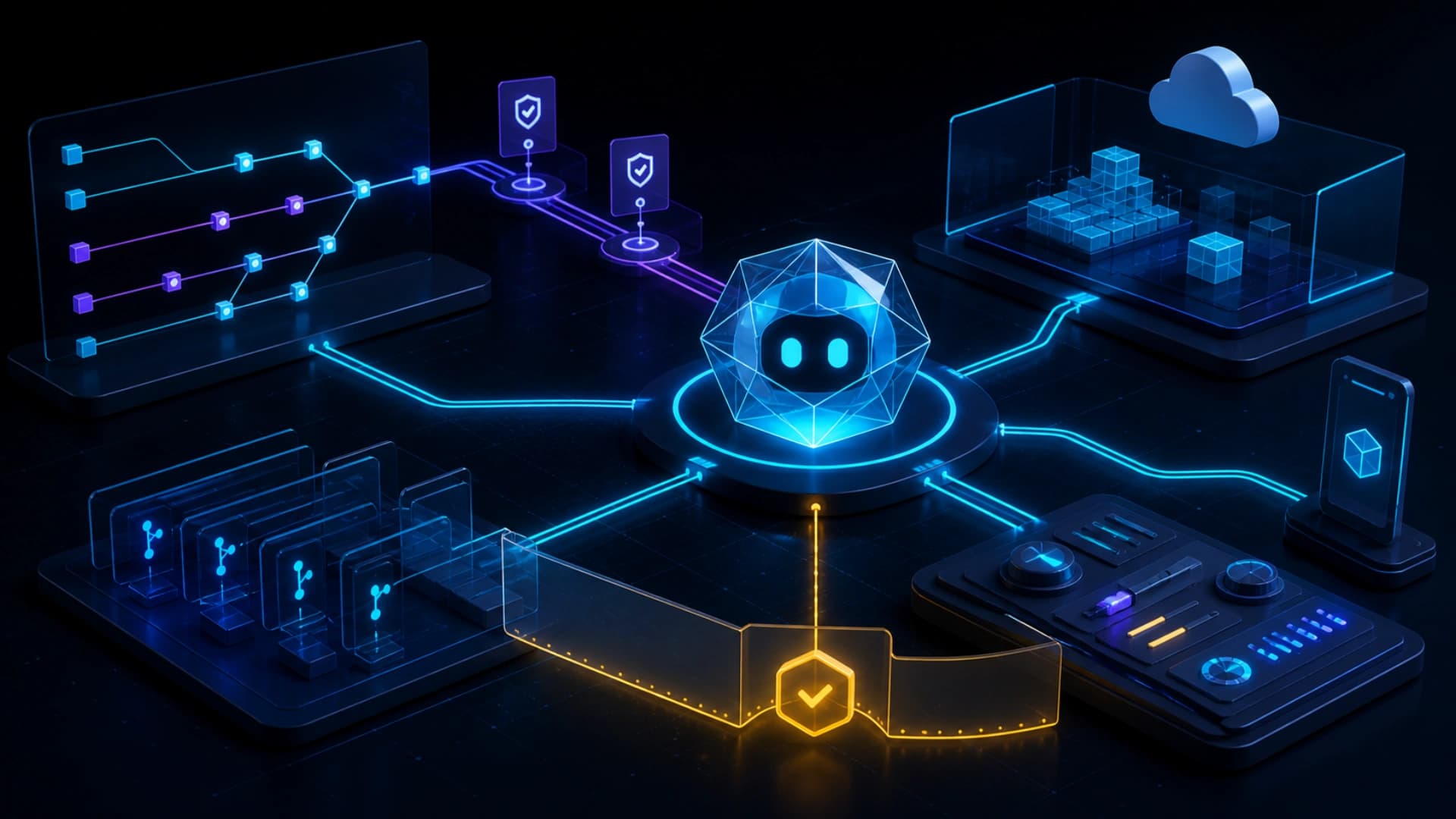

On August 4, 2026, Microsoft announced that the GitHub Copilot Agent is stable in the .NET and Python providers for Microsoft Agent Framework. The important change is not another chat model. It is the connection between a coding harness that can read and write code, run shell commands, and use MCP, and a broader framework for building agents.
The integration separates two layers. The GitHub Copilot CLI and SDK own the agent loop, including model calls, tool invocation, planning, and session state. Agent Framework provides a consistent surface for instructions, tools, streaming, middleware, observability, and human-in-the-loop approval. Developers can keep Copilot’s repository-aware coding capabilities while embedding them in larger systems through familiar Agent Framework abstractions.
The available capabilities include shell execution, file operations, URL fetching, and MCP servers. Microsoft emphasizes that these system abilities are not opened without boundaries. They flow through a permission handler, allowing the host application to approve, deny, or request confirmation for each sensitive action. Approval-required function tools can use the same control surface.
Observability is another important layer. The Copilot Agent participates in Agent Framework’s OpenTelemetry tracing, making it easier to connect model calls, tool use, and agent runs to existing monitoring systems. A production agent needs more than a final answer. Teams need to know when it acted, which tool it used, why an action occurred, and where a human approval or rejection changed the run.
Stable does not mean zero-configuration deployment. Microsoft’s documentation requires an authenticated GitHub Copilot runtime and an active subscription, while real deployments still need CLI path, working directory, model, and timeout configuration. If an agent receives shell or file permissions, Microsoft also recommends a container or Dev Container to reduce exposure of source code and system data.
The broader signal is that coding-agent competition is moving from isolated product features toward composable runtimes. An enterprise may not want every automation to live inside one chat surface. It may need a repository agent, internal tools, approval services, telemetry, and existing workflows to work together. Turning the Copilot harness into an Agent Framework provider creates that connection, but deployment teams still own the permission boundary, approval policy, and execution isolation.