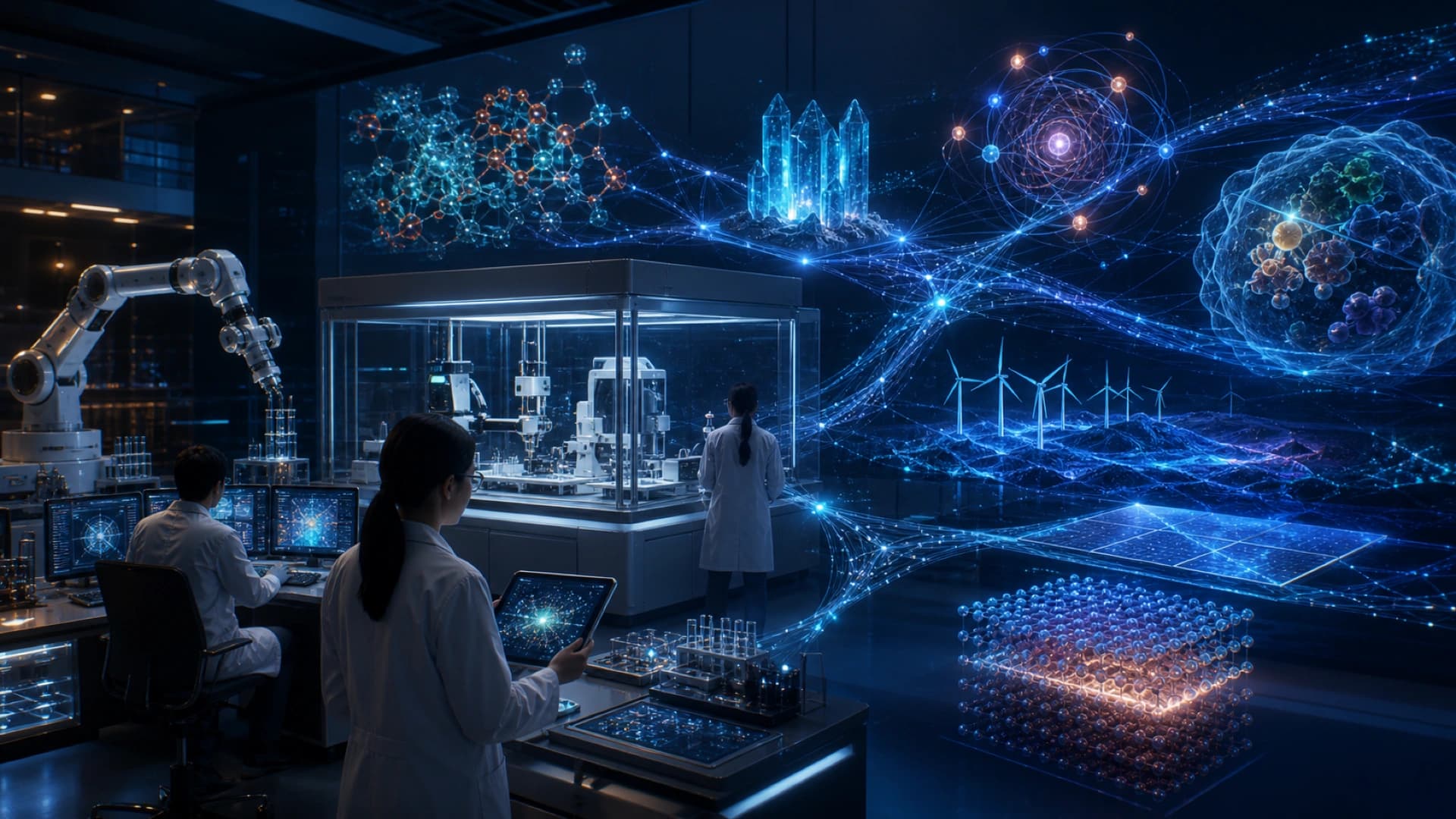
On July 22, 2026, Microsoft announced a $60 million investment to support the U.S. Department of Energy’s Genesis Mission and introduced the Scientific Partnership Advancing Research & Knowledge, or SPARK, as a coordination hub. The important point is not only the size of the commitment. It is the attempt to put AI, high-performance computing, experimental facilities, and research teams inside one long-running workflow.
Microsoft says the package includes $40 million in Azure compute and AI credits over three years, plus $20 million in solution-engineering enablement services covering engineering, architecture, deployment, adoption, and acceleration. That is Microsoft’s description of the investment structure, not a promise that every research team receives cash directly. Allocation and usage will depend on the Genesis Mission partnership arrangements.
The Genesis Mission is intended to connect the Department of Energy’s 17 national laboratories, experimental facilities, historical scientific data, and next-generation computing. Microsoft cites a goal of doubling the productivity and impact of American research and innovation within a decade. That is a mission target, not an already validated outcome.
SPARK is presented as a single front door for the collaboration. Its proposed structure includes a Genesis Mission program-management office, an AI for Science Center of Excellence, Azure-credit optimization, technical-services management, and joint research and development. The design reflects a central challenge in AI for Science: the hard part is not only whether a model can suggest a hypothesis, but also how projects are prioritized, secured, governed, reproduced, and moved from an idea to a deployed scientific workflow.
Microsoft also says it will provide Microsoft Discovery to relevant teams. The company describes Discovery as a governed research platform combining AI models, simulation, data, and experimental workflows, with autonomous lab orchestration, agentic memory, data curation, and multi-hop reasoning over enterprise science data. These are Microsoft’s claims about product capability and availability, and they still require validation against real data, permissions, and laboratory equipment.
The announcement names early projects involving energy-storage materials and biosystems design at Pacific Northwest National Laboratory, biosecurity at Lawrence Livermore National Laboratory, autonomous labs at Johns Hopkins University Applied Physics Laboratory, and nuclear permitting and remote operations at Idaho National Laboratory. These examples come from Microsoft’s partnership announcement and should be treated as ongoing or provider-described projects, not completed independent scientific or clinical validation.
The commitment shows AI for Science moving from a single research assistant toward a full infrastructure problem. Data standards, compute, models, simulations, experimental automation, memory, permissions, and expert review have to be designed together. A useful evaluation should separate hypothesis quality, experiment success, reproducibility, review time, and safety incidents instead of judging the system only by whether it can produce an impressive research answer.