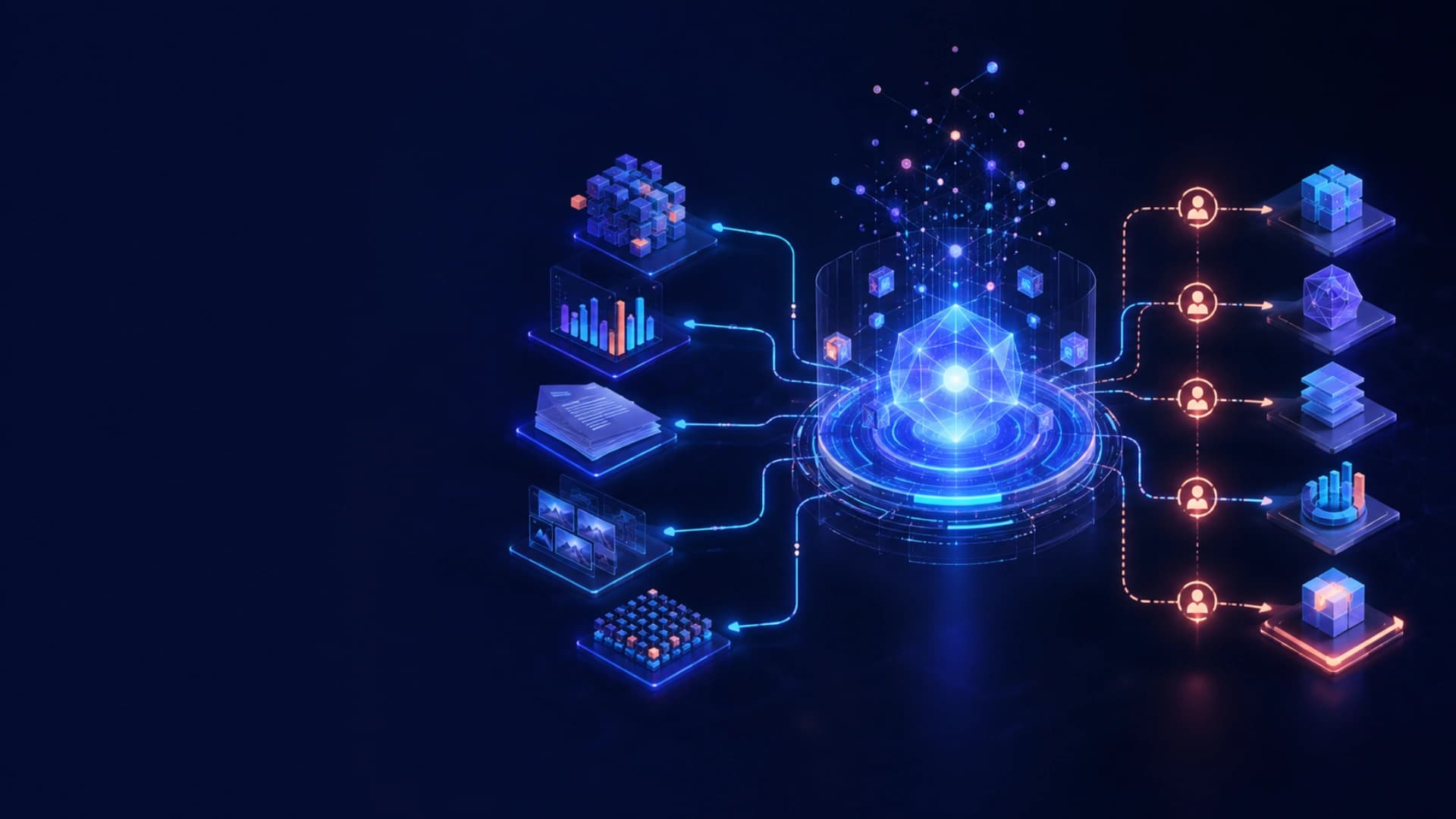

OpenAI launched the GPT-5.6 family on July 9, 2026, with three models: Sol as the flagship, Terra as the balanced everyday model, and Luna as the lowest-cost option. The important point is not only that the models are more capable. It is that OpenAI is shaping them into a stack for agent workflows, where teams can match intelligence, cost, and latency to the task.
The positioning is clear. Sol is designed for complex reasoning, coding, knowledge work, cybersecurity, and science. Terra is meant for everyday work where capability and cost both matter. Luna is built for fast, high-volume, lower-cost tasks. That three-layer design is practical because real business workflows rarely need the most expensive model for every step.
The strongest signal is agentic coding. OpenAI calls GPT-5.6 Sol its best coding model and points to gains across coding-agent and long-horizon engineering evaluations such as Terminal-Bench and DeepSWE. That matters because software work is not only about writing one snippet. A useful coding agent has to understand a repository, use a terminal, run checks, fix errors, and keep direction across multiple steps.
GPT-5.6 also introduces Programmatic Tool Calling. The model can write and run lightweight programs that coordinate tools, process intermediate results, monitor progress, and choose the next action. For tool-heavy workflows, that is a meaningful change. Instead of sending every tool response back through the model, a workflow can filter intermediate data first and keep only what actually needs reasoning.
The max and ultra settings point in the same direction. Max gives the model more time to reason, explore alternatives, run checks, and revise. Ultra goes further by coordinating four agents in parallel by default. This brings multi-agent execution closer to the model product layer instead of leaving every team to assemble it from scratch. For work that combines research, implementation, testing, and review, parallel agents look much more like real project execution than a single chat thread.
For teams, the practical takeaway is not to treat GPT-5.6 as one model choice. The better pattern is workload routing. Use Sol for high-risk, high-complexity work. Use Terra for everyday analysis, documents, and coding assistance. Use Luna for bulk classification, first drafts, formatting, and low-risk tasks. That is how agent systems can become both more capable and more affordable.
The broader market signal is that AI competition is moving from model ranking to workflow economics. The useful question is whether a model can complete more verified work across long-running, multi-tool, multi-step tasks while keeping cost under control. GPT-5.6 makes that direction explicit: frontier intelligence has to scale up for hard work and scale down economically for daily workflows.