On August 12, 2026, Google DeepMind introduced SL2T, a sign-language-to-text model that is now powering Gboard and Live Transcribe on Pixel 11. The first release supports American Sign Language to English, with more devices and languages planned. The change is more than a translation-model launch: it lets Deaf and hard-of-hearing users sign where a hearing user would normally type.
SL2T turns signing into text for web searches, messages, and documents, and Google says users can ask Gemini to answer questions or execute tasks from that input. In Live Transcribe, users can sign responses in conversations rather than type back and forth. These are Google-described product scenarios; actual usefulness will depend on device, language, signing proficiency, and the conditions of the camera view.
Sign-language translation is not a word-by-word mapping from English to hand movements. Google DeepMind notes that sign languages are natural languages with their own grammars and lexicons, and that meaning is conveyed simultaneously through hands, arms, torso, head, and face. The model therefore needs machine translation and high-frame-rate computer vision rather than simple gesture recognition.
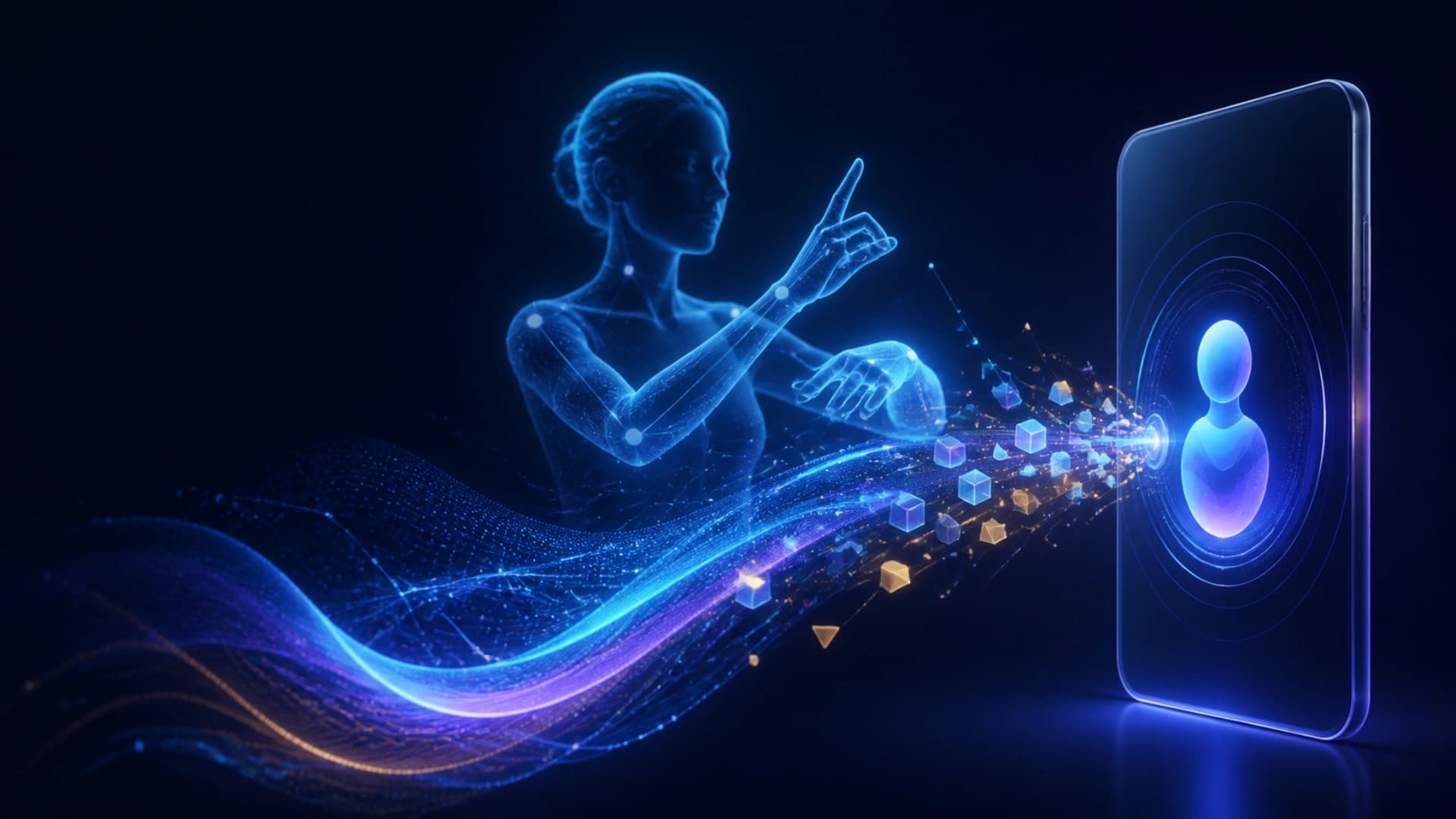
The privacy design avoids sending the raw camera feed directly to the server. Google says the on-device MediaPipe Holistic model first converts signing into pose landmark coordinates, then sends the geometric sequence for translation while the original video can be discarded immediately. That reduces raw-video retention risk, but teams still need to understand how coordinates, transport, server processing, and account data are protected.
Google DeepMind says SL2T was trained on more than 100,000 hours across more than 50 sign languages, with roughly a quarter of the data in ASL. The team reports a zero-shot score of 70 BLEURT on FLEURS-ASL and calls SL2T the most capable sign-language translation model to date. Those are Google-published benchmark results; they do not replace user studies across communities, dialects, signing speeds, and real conversations.
For product deployment, the team also worked on streaming latency, hallucinations on non-signing inputs, left-handed signers, and one-handed signing when the other hand holds a phone. Google says it built with the Deaf community and created an AI Sign Language Advisory Committee, publishing a joint impact report about capabilities and limitations. Those governance steps matter because quality is not only a benchmark score; it is whether people can use the system naturally, reliably, and with dignity.
The broader signal is that multimodal AI is moving from recognizing images to letting people operate digital services through their own language. Once signing can feed search, documents, and Gemini task execution, an accessibility feature also becomes an agent interface. Future evaluation should cover languages, dialects, one-handed and fast signing, latency, error impact, processing transparency, and the user's ability to control data.